Free UK delivery on all orders · At-home saliva test · Secure checkout
Free UK delivery on all orders
How Boone Connects Biology and Diet
Understanding Your Biology
The process begins with a small saliva sample. The aim is not to diagnose disease or make medical predictions, but to understand natural genetic variation that can influence how the body interacts with nutrients.
Below is an overview of the biological analysis process used by Boone.
Saliva samples are processed by accredited genomic laboratories using widely used genotyping technologies.
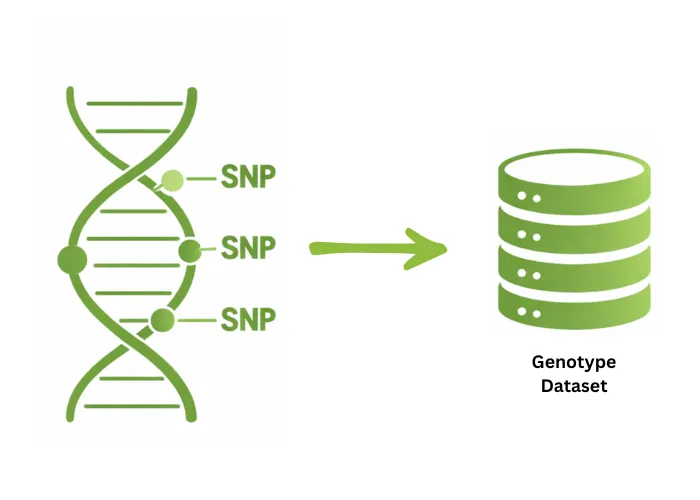
These platforms analyse thousands of genetic locations across the genome and produce a dataset describing an individual's genotype.
Within this dataset are naturally occurring genetic variations known as single nucleotide polymorphisms (SNPs).
SNPs represent small differences in DNA that occur between individuals.
Some of these variants have been linked in scientific studies to how the body processes nutrients such as fats, carbohydrates, caffeine and certain vitamins.
This genomic data forms the biological foundation used to explore how nutrition may interact with an individual's biology.
Genomic analysis identifies naturally occurring DNA variations known as SNPs.
Selecting Diet-Relevant Variants
Not all genetic variants are relevant to nutrition.
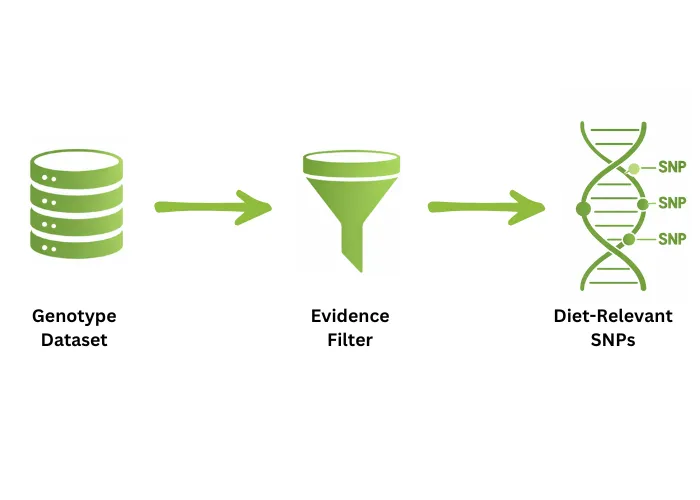
From the full genomic dataset, Boone focuses on a carefully selected subset of variants that have been linked to diet-related biological processes.
These variants are selected based on published research in the field of nutrigenetics and evaluated using evidence-grading frameworks that prioritise:
This approach helps ensure that only variants with credible scientific support are considered when exploring potential links between genetics and nutrition.
Evidence-based filtering identifies genetic variants that have been linked to nutrition related biological processes.
Interpreting Genetic Traits
Individual genetic variants rarely act in isolation.
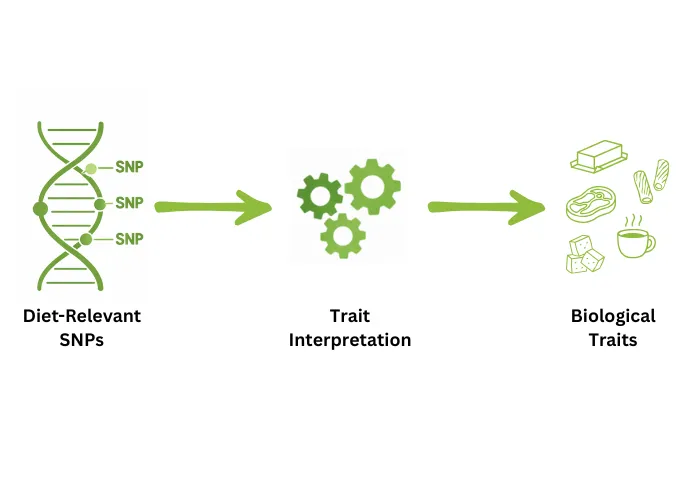
Instead, groups of related variants are considered together to provide insight into broader biological traits relevant to nutrition.
Examples of biological areas explored include:• lipid metabolism • glucose response • caffeine metabolism • vitamin utilisation
By evaluating these variants collectively, Boone can highlight biological traits that may influence how certain nutrients interact with the body.Importantly, genetic effects in nutrition are typically modest.
Lifestyle, environment and long-term dietary patterns remain critical drivers of health.
For this reason, Boone presents genetic insights as context for understanding diet, rather than deterministic predictions about health outcomes.
Selected genetic variants are evaluated collectively to provide insight into broader biological traits relevent to nutrition.
Nutritional Analysis
To understand how diet interacts with biology, Boone converts meals into structured nutritional data.
This analysis considers three complementary aspects of diet: • macronutrient composition • micronutrient intake • level of food processing
Each provides a different perspective on dietary patterns and nutritional quality.
Macronutrients are the nutrients that provide energy and form the primary components of the human diet. These include carbohydrates, fats and protein, each of which plays an important role in supporting biological processes such as energy production, metabolism and tissue maintenance.
The balance of macronutrients within a diet can influence how the body regulates energy, manages blood glucose levels and supports physical performance. For this reason, understanding macronutrient intake is a key part of analysing overall dietary patterns.
Boone analyses meals to estimate their macronutrient composition, allowing dietary patterns to be evaluated across both individual meals and longer time periods.
By examining these patterns over time, Boone can highlight how different energy sources contribute to the overall structure of a diet and help identify short-term trends as well as longer-term dietary habits.
This allows macronutrient intake to be viewed not only at the level of individual meals, but also across longer timeframes, helping reveal patterns in how energy sources are distributed within a diet.
Micronutrients
Micronutrients are vitamins and minerals required in smaller quantities but essential for many biological processes within the body.
These include nutrients such as iron, magnesium, vitamin D, vitamin B12 and folate, which support functions ranging from energy metabolism and immune function to bone health and cellular repair.
Unlike macronutrients, micronutrients do not provide energy. However, inadequate intake can affect the body's ability to carry out normal physiological processes.
Because micronutrient intake can vary significantly from day to day, understanding dietary adequacy often requires analysing patterns over longer periods of time.
Boone converts meals into detailed nutritional data, allowing micronutrient intake to be estimated across individual meals and tracked over time. This helps highlight potential nutrient gaps and provides insight into how a diet aligns with established nutritional reference values.
By analysing dietary patterns over time, Boone helps reveal how consistently different micronutrients appear within a diet and whether intake may fall below recommended levels.
Food Processing
In addition to nutrient composition, diets can also be analysed based on the level of food processing.
Modern food environments contain a wide range of products that vary from minimally processed whole foods to highly industrially formulated products known as ultra-processed foods.
Ultra-processed foods are typically manufactured using multiple ingredients, additives and industrial processing techniques. These products are often designed for convenience, long shelf life and palatability.
Research in nutritional epidemiology has increasingly linked high consumption of ultra-processed foods with poorer long-term health outcomes, including increased risk of obesity and metabolic disease.
Boone evaluates the level of processing within recorded meals, helping identify the presence and proportion of ultra-processed foods within a diet.
By analysing this alongside nutrient composition, Boone provides a broader view of dietary patterns that considers both what nutrients are consumed and how foods are produced.
This allows diets to be evaluated not only in terms of nutrient intake, but also in terms of the overall structure and quality of the foods consumed.
Connecting Diet and Biology
Understanding biology and diet independently is only part of the picture. The final step is examining how these two layers interact.
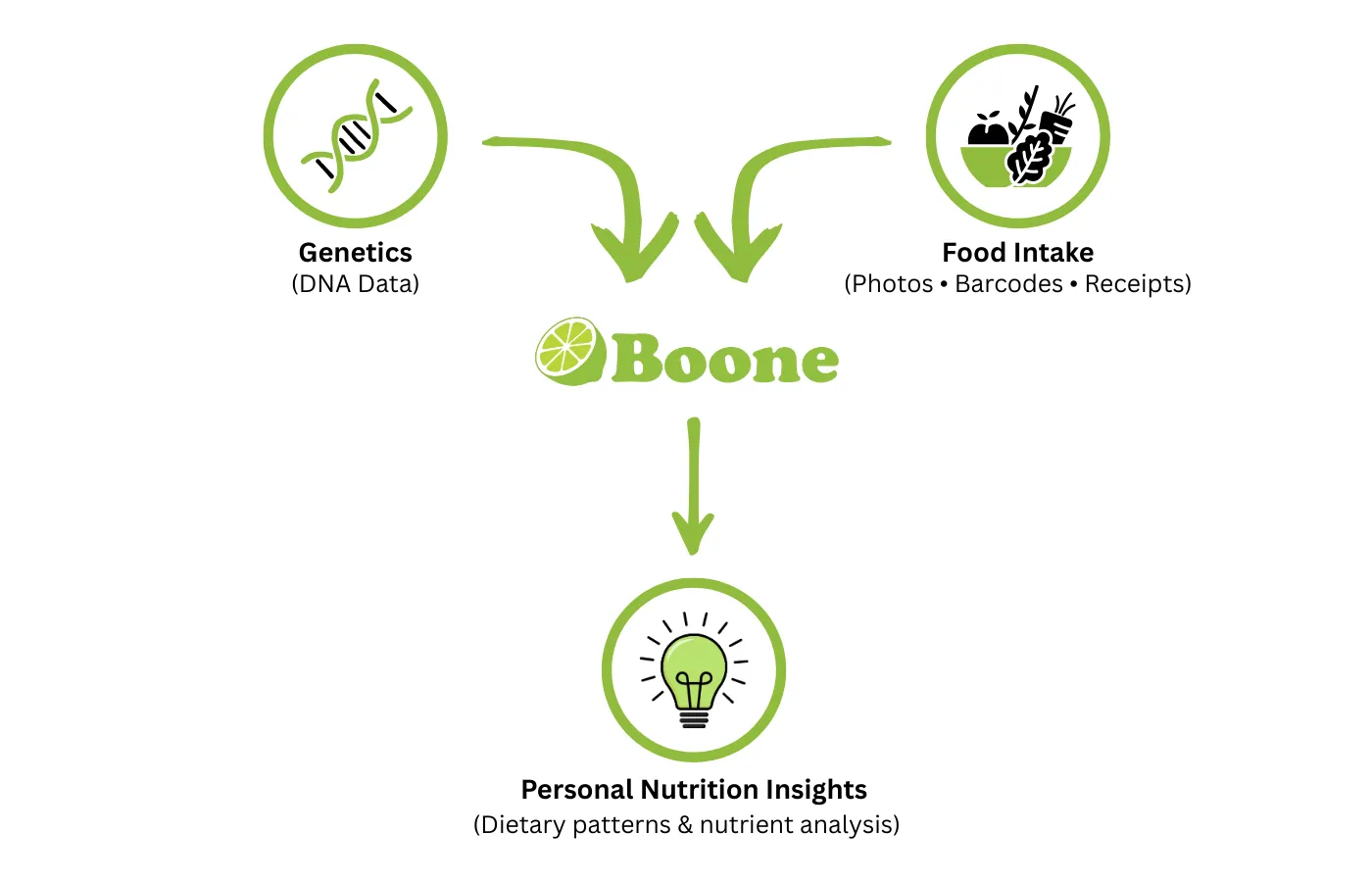
Boone combines genetic insights with detailed dietary analysis to help individuals better understand how their everyday food choices align with their biology.
By analysing meals over time, the platform can identify patterns in nutrient intake, dietary balance and levels of food processing. These patterns can then be viewed alongside biological traits derived from genetic variation.
This allows dietary behaviour to be explored in a biological context, helping individuals better understand how their diet may support or interact with their underlying physiology.
Genetic effects in nutrition are typically modest. Many other factors, including lifestyle, environment and long term habits, also influence health outcomes.
For this reason Boone focuses on providing insights that help people understand their diet over time rather than making deterministic predictions about health.
Personalised nutrition, powered by your biology
Start exploring how your genetics and everyday diet interact.