
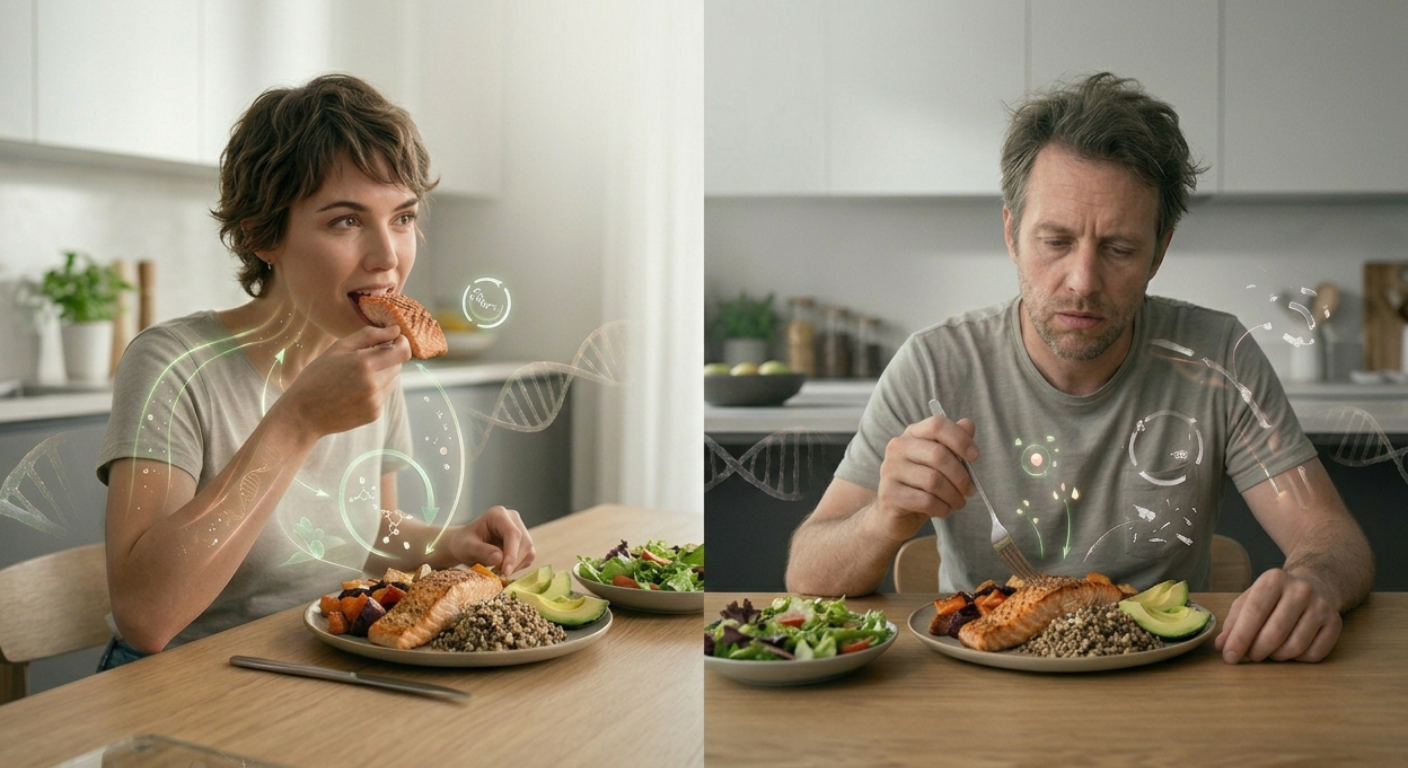
You have made changes. You read the labels. You cook most of your meals. You have cut back on the obvious things - the late night snacks, the takeaways, the second glass of wine on a Tuesday. You follow the kind of advice that everyone agrees on.
And yet something is not quite adding up. Your energy is not where you thought it would be. A colleague who eats very differently seems to feel great. You followed the same approach as a friend for three months and had completely different results. You have done everything the guidance suggests, and the guidance has not quite delivered what it promised.
If this sounds familiar, you are not alone - and more importantly, you are probably not doing anything wrong.
The problem is not your effort or your commitment. The problem is that most of the nutritional advice available to us was designed for a population. And you are not a population. You are one person, with one particular biology, living one specific life. The gap between those two things - between general guidance and individual need - is where a lot of people quietly get lost.
This article is about that gap. What creates it, why it is bigger than most people realise, and what you can do with that knowledge.
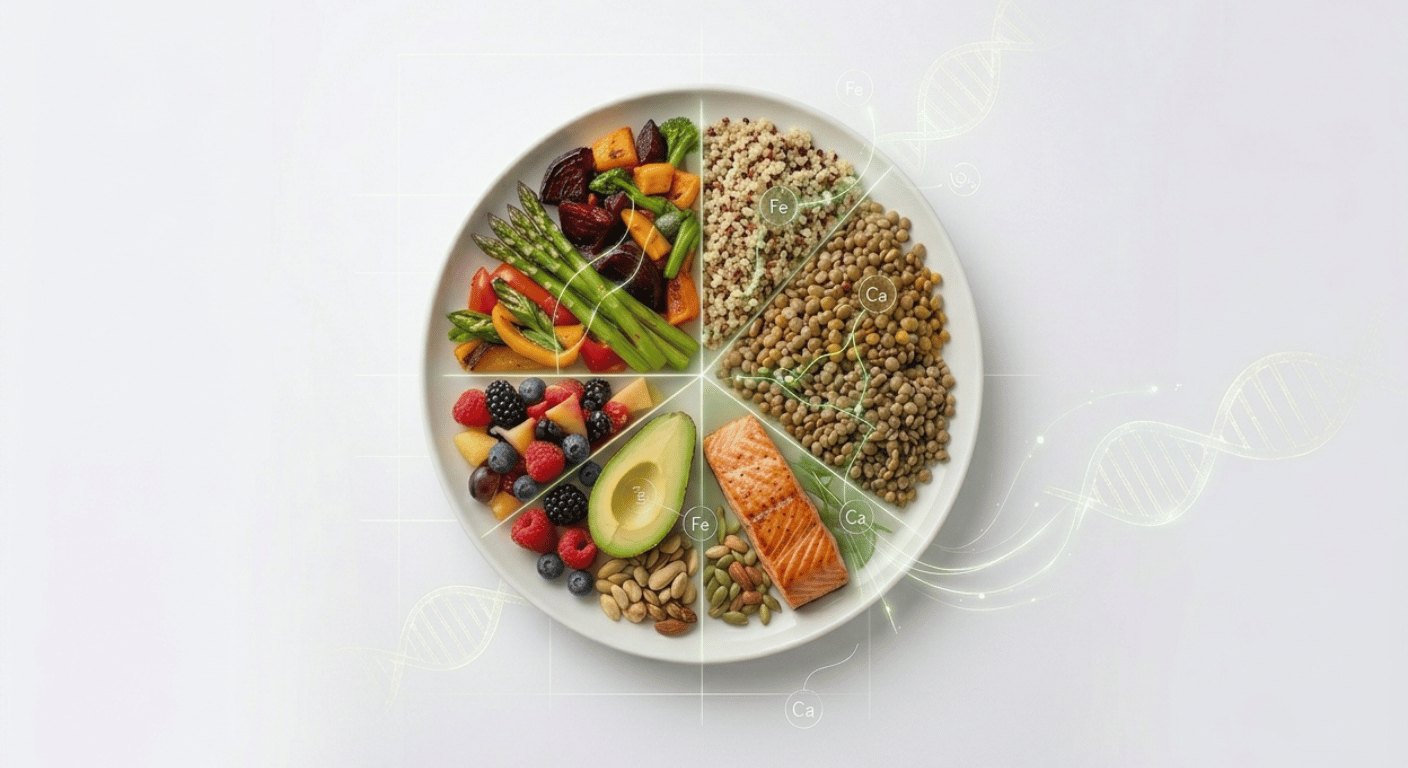
The Eatwell Guide is the UK government's framework for healthy eating, and it is genuinely useful. It is built on substantial evidence, it gives clear proportional guidance across food groups, and it reflects a broad scientific consensus about what constitutes a balanced diet. If you are looking for a starting point for eating well, it is a reasonable one.
But it is worth understanding what the Eatwell Guide actually is - and what it is not.
It is a population tool. It was designed to give guidance that works, on average, for the greatest number of people. It describes what a statistically average adult needs to maintain a broadly healthy diet. That is exactly what it should do. And it is exactly where its limitations begin.
The first limitation is access. Research from the Food Foundation has consistently shown that eating to Eatwell standards is financially out of reach for a significant proportion of UK households. The foods the guide recommends - fresh vegetables, oily fish, varied protein sources, whole grains - cost more than the alternatives. For many families, following the Eatwell Guide is not a matter of knowledge or motivation. It is a matter of budget. Good dietary advice that people cannot afford to follow is, in practical terms, incomplete advice.
The second limitation is more fundamental. Even for people who can follow the Eatwell Guide, it describes average needs - not their needs. It tells you roughly how much fat, protein, carbohydrate, and fibre most people require. What it cannot tell you is how your particular body processes those nutrients, or whether the amounts that work for the average person are the amounts that work for you.
This is not a criticism of the guide. It is doing exactly what it was designed to do. The issue is not the guidance - it is the assumption, rarely stated explicitly, that population-level advice translates directly into personal results. For many people, it does not. And that gap deserves an honest conversation.
Body Mass Index (BMI) is one of the most widely used tools in public health. It is simple, it is quick, and at a population level it does a reasonable job of identifying broad patterns between weight and health risk across large groups of people. That is what it was designed to do.
What it was not designed to do is tell you, personally, very much about your health.
BMI is calculated from height and weight alone. It says nothing about how much of your body is muscle versus fat, where fat is distributed, your bone density, your metabolic health, your nutrient status, or any of the other factors that actually paint a picture of how well your body is functioning. Two people with identical BMI scores can have completely different body compositions, completely different energy levels, and completely different nutritional needs.
This matters in the context of eating well because BMI is often used as a proxy for whether someone's diet is working. If your BMI is in a certain range, the assumption follows that your diet must be broadly fine. If it is outside that range, the assumption is that you need to eat differently. Neither of these conclusions is reliably drawn from a height-to-weight ratio alone.
The medical and scientific community has been increasingly vocal about the limitations of BMI as a personal health measure. It is a statistical tool that works across populations and loses much of its meaning when applied to individuals - particularly when factors like ethnicity, age, muscle mass, and sex introduce significant variation that BMI does not account for.
The pattern here is the same as with the Eatwell Guide. A tool built for populations, applied to individuals, with the gap between the two rarely acknowledged. Understanding that gap is not about dismissing these tools - it is about being clear on what they can and cannot tell you about your specific body.
Here is something most people do not know: the reference values for many vitamins and minerals that underpin UK dietary guidance were largely established in 1991. The Dietary Reference Values published that year set the framework for recommended intakes of nutrients - from vitamin D to iron to folate - that still informs much of the nutritional advice people receive today.
1991 was thirty-four years ago. The world people eat in today looks very different from the world those values were built around.
This is not to say the 1991 values are wrong - for many nutrients, the core science remains sound. But those reference values were designed with a specific purpose: to prevent deficiency at a population level. They describe the minimum intake required to avoid the clinical signs of deficiency in most people. They were not designed to identify optimal intake for individuals, to account for the significant variation in how people absorb and process nutrients, or to reflect the changes in food production, lifestyle, and environment that have taken place in the decades since.
Several things have changed meaningfully since 1991 that affect how we think about micronutrient needs. Farming practices have shifted, affecting the nutrient density of some foods. The proportion of highly processed food in the average diet has increased substantially, often at the expense of micronutrient-rich whole foods. Sedentary lifestyles have become more common, which affects how the body uses certain nutrients. And our understanding of the genetics of nutrient absorption - how differently individuals process the same vitamins and minerals - has advanced enormously.
Vitamin D is perhaps the clearest example of where the guidance has struggled to keep pace. For years, the UK recommendations on vitamin D were set at levels that many nutrition scientists considered insufficient, particularly given that a large proportion of the UK population has limited sun exposure for much of the year. Government guidance now recommends supplementation for most adults through autumn and winter - an acknowledgement that the original reference values did not adequately reflect real-world needs for a significant portion of the population.
And yet even the updated vitamin D guidance is a population recommendation. It describes what most people probably need. It does not - and cannot, at that level - tell you what your body specifically needs, which is partly determined by the genetic variants that affect how efficiently you absorb and convert it.
This is one of the reasons Boone analyses your genetic profile across a detailed set of vitamins and minerals - including B vitamins, vitamin D, iron, calcium, choline, and more. The reference values give us a population baseline. Your genetics add the personal layer that the 1991 framework was never designed to provide.
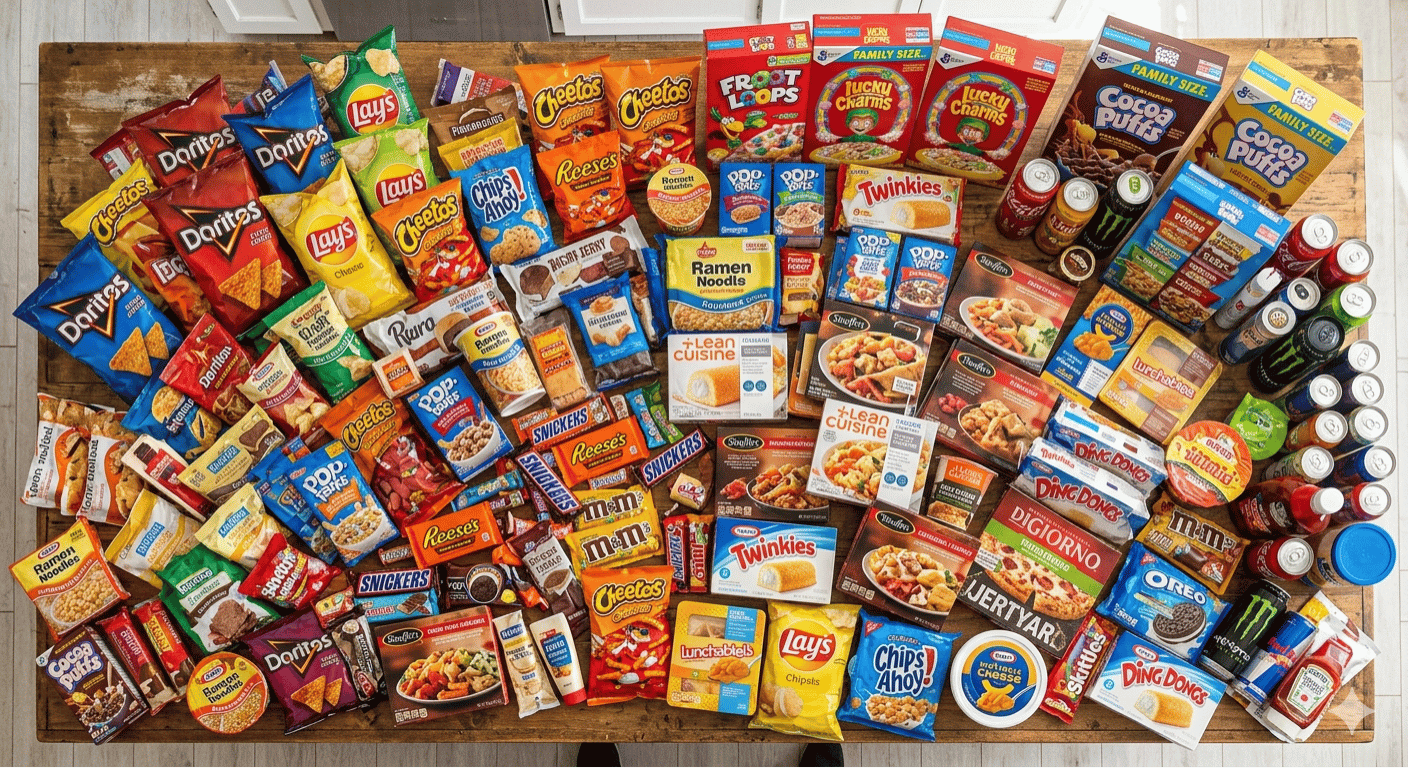
There is another reason why eating well has become harder for many people - and it has nothing to do with individual choices or effort. The food environment most of us navigate every day looks very different from the one the original dietary guidelines were built around.
Over the past four decades, the proportion of ultra-processed food in the average UK diet has grown substantially. Ultra-processed foods - products that go well beyond basic cooking and processing into industrial formulation with additives, emulsifiers, flavourings, and ingredients not typically found in a home kitchen - now make up more than half of the calories consumed by many adults in the UK. For children and young people, that proportion is even higher.
This matters for two reasons. First, ultra-processed foods tend to displace the whole foods that provide the vitamins, minerals, fibre, and other nutrients a balanced diet depends on. Second, the nutritional composition of many everyday products has shifted over time in ways that are not always obvious from the label or reflected in the guidance people receive.
One of the less-discussed shifts in the UK food supply over recent decades is the widespread replacement of traditional cooking fats with seed oils - highly refined oils extracted from crops such as sunflower, rapeseed, soybean, and corn. These oils are now present in an enormous range of packaged and processed foods, from bread and biscuits to ready meals and sauces.
The conversation around seed oils is still developing in nutritional science, and it would be an overstatement to present them as universally harmful. Many are used because they are cheap, stable, and technically functional in food manufacturing. But their widespread adoption has changed the fatty acid composition of the average UK diet in ways that were not anticipated when the original dietary fat guidelines were written - and the long-term implications of that shift are still being studied.
More broadly, food reformulation - the practice of changing the recipe of existing products, often to reduce sugar, salt, or fat in response to regulatory pressure or consumer demand - has created a situation where a product that looks familiar on a shelf may have a meaningfully different nutritional profile from what it contained ten years ago. Sometimes this is an improvement. Sometimes ingredients are swapped for alternatives whose effects are less well understood. In both cases, the person buying it is often unaware that anything has changed.
Marketing adds another layer of complexity. Foods labelled as natural, wholesome, high protein, or low fat carry associations of health that are not always reflected in their actual nutritional content. The regulatory framework around health claims on food packaging has improved, but it has not eliminated the gap between how products are presented and what they actually contain.
None of this is intended as scaremongering. Most people eating a diet that includes some processed food, some seed oils, and some products with health claims are not in immediate danger. The point is more nuanced: the food environment in which most UK adults are trying to eat well has become significantly more complex and less transparent since the guidelines that are supposed to help them were last substantially updated.
Eating well in 2025 requires navigating a food system that has shifted considerably from the one our dietary frameworks were designed around. That context matters when we try to understand why doing the right things does not always produce the results people expect.
So here is where we are.
We have dietary guidelines that are genuinely well-intentioned and grounded in real science - but designed for populations rather than individuals, and in some areas not substantially updated in over thirty years. We have a food environment that has shifted considerably from the one those guidelines were built around, making it harder to eat well even for people who are trying. And we have measurement tools like BMI that work at scale but tell us relatively little about individual health.
None of this means the guidance is wrong. It means it is general. And general, by definition, is not the same as personal.
If you follow the Eatwell Guide carefully, eat mostly whole foods, move regularly, and still feel like your diet is not quite delivering - that gap is real. It is not imagined, and it is not a failure of willpower. It is the natural consequence of applying population-level advice to an individual body that may respond differently from the average the guidance was built around.
The question worth asking is: what would it look like to take the general advice and make it yours? Not to replace it - but to add the personal layer that the general guidance structurally cannot provide.
We are all different. This is not a wellness slogan - it is a biological fact. And one of the most significant ways we differ from each other is in how our bodies handle the food we eat.
Two people can sit down to an identical meal and have meaningfully different experiences of it. One processes the carbohydrates efficiently and feels energised for hours. The other experiences a sharper energy spike and a quicker dip. One absorbs the iron readily. The other, despite eating the same amount, absorbs considerably less. One metabolises the caffeine in the coffee they had with the meal quickly and feels fine by evening. The other is still feeling its effects at midnight.
These differences are not random. They are not purely explained by gut health, lifestyle, or stress - though all of those play a role. A significant part of the variation comes from genetics. The specific variants in your DNA influence how your body processes nutrients at a fundamental level - from how efficiently you convert certain vitamins into their active forms, to how your liver handles caffeine, to how your gut responds to lactose.
This is the field of nutrigenetics - the study of how genetic variants affect the way your body responds to the food you eat. It is a relatively young science, and that is worth being honest about. Not every genetic link to nutrition is well-established, and the research is still developing in many areas. But for a growing number of specific variants - particularly those related to vitamin absorption, fat metabolism, carbohydrate response, and certain lifestyle factors - the evidence is consistent and meaningful enough to inform genuinely useful personal guidance.
The key word throughout is personal. Nutrigenetics does not tell you to eat a completely different diet from the one general guidance recommends. It does not override the fundamentals - variety, whole foods, adequate protein, plenty of vegetables - that hold true for almost everyone. What it adds is a layer of biological context that helps you understand why your experience of eating well might differ from the experience the guidelines were built around.
The honest answer is: not everything. You still need to eat a varied diet. The principles of good nutrition - the things the Eatwell Guide gets right - still apply. Good general advice remains good advice.
But some things do change when you have a clearer picture of how your body works.
If you know that you have a genetic variant associated with lower vitamin D conversion, you can think about your intake and supplementation more precisely rather than following a one-size recommendation. If you know that your carbohydrate response suggests you are more sensitive to blood glucose fluctuations, you can think about the type and timing of carbohydrates in your diet in a more informed way. If you understand that your omega-3 conversion from plant sources is less efficient than average, you can make more conscious choices about the sources you rely on.
None of these insights require you to overhaul your diet or follow a rigid plan. They give you a more accurate map of your own biology - so that when you make food choices, you are making them with better information than the population average can provide.
That is what personalised nutrition actually means in practice. Not a bespoke meal plan delivered by an algorithm. Not a list of foods to eliminate. Just a clearer picture of how your particular body handles what you eat - and what that means for the choices that are most worth paying attention to.
What this looks like in practice
Understanding that your genetics influence your nutrition is one thing. Having a practical way to act on that understanding is another. This is the gap that most genetic testing has historically failed to close - a report arrives, full of interesting information, and then sits unread because there is no obvious connection between the data and the food decisions you make every day.
Boone is built around closing that gap. The starting point is a DNA test - a simple saliva sample taken at home and returned in the post - that analyses the genetic variants with the strongest peer-reviewed links to nutritional response. The results appear in the Boone app, explained in plain language: what your result is, what it means, which genes are involved, and what it suggests for your diet.
The Boone app connects your genetic profile to the food you actually eat - not the food you intend to eat, or the ideal diet described in a set of guidelines, but the real food in your kitchen, in your shopping basket, and on your plate day to day.
If your genetic profile suggests you may have lower than average vitamin D conversion, you can scan the foods you are already eating and see which ones contribute meaningfully to your intake - and which do not. If your result highlights a tendency towards lower iron absorption, your food log can show you what your actual iron intake looks like over time, so you can see whether the gap between your genetic profile and your real diet is worth addressing.
This matters because most people do not have a deficit of nutritional information. They have a deficit of nutritional information that is relevant to them, connected to the food they are actually eating. Boone is not trying to add more general advice to a world that already has plenty of it. It is trying to make the advice that already exists more personal and more connected to real life.
It is worth being clear, as we have been throughout this article, about what understanding your genetics does not do.
It does not fix the food system. The structural issues around food access, ultra-processed food, and the gap between dietary guidance and real-world eating are not resolved by a DNA nutrition test. Those are systemic problems that require systemic solutions - better food policy, clearer labelling, fairer access to nutritious food. Boone is a personal tool, not a substitute for those broader changes.
It does not override a good diet. If your overall diet is poor - high in ultra-processed food, low in vegetables, inconsistent in variety - knowing your genetic profile will not compensate for that. The fundamentals of good nutrition apply to everyone, regardless of their variants. Genetics adds a layer of personal nuance on top of good eating, not instead of it.
It does not provide medical advice. Boone is not a medical device. It is not a diagnostic tool and it is not a substitute for advice from a GP, registered dietitian, or other healthcare professional. If you have specific health concerns or conditions that affect your diet, those conversations belong with a qualified professional.
What it does is offer something that the population-level guidance we have discussed throughout this article cannot: a personal biological picture of how your body is built to handle the food you eat. Not a replacement for good general advice. A more personal version of it.
If there is one thing to take from everything in this article, it is this: the reason healthy eating has not quite worked the way you expected is probably not you.
You have been following advice that was built for a population. A population that includes you, but was never specifically about you. Advice designed around an average that may not reflect your biology, your metabolism, or the way your particular body handles the food you give it.
On top of that, you have been trying to eat well in a food environment that has become harder to navigate - with products that have changed, guidelines that have not fully kept pace, and a gap between what the science says and what is practical and affordable for most households.
None of that is your fault. And knowing that it is structural rather than personal is actually a useful place to start.
Because the next step - the move from general to personal - is available. Understanding how your body is built to handle carbohydrates, process fats, absorb vitamins, and respond to the foods you eat every day is no longer something reserved for elite athletes or people with unlimited budgets. It is something Boone was built to make accessible, connected to real food, and genuinely useful in everyday life.
The guidelines are a starting point. Your biology is the next layer. And that next layer is where things start to make more sense.
Want to go deeper on the science? Read our full guide to nutrigenetics - what it is, how it works, and what the Boone report covers in detail.
