

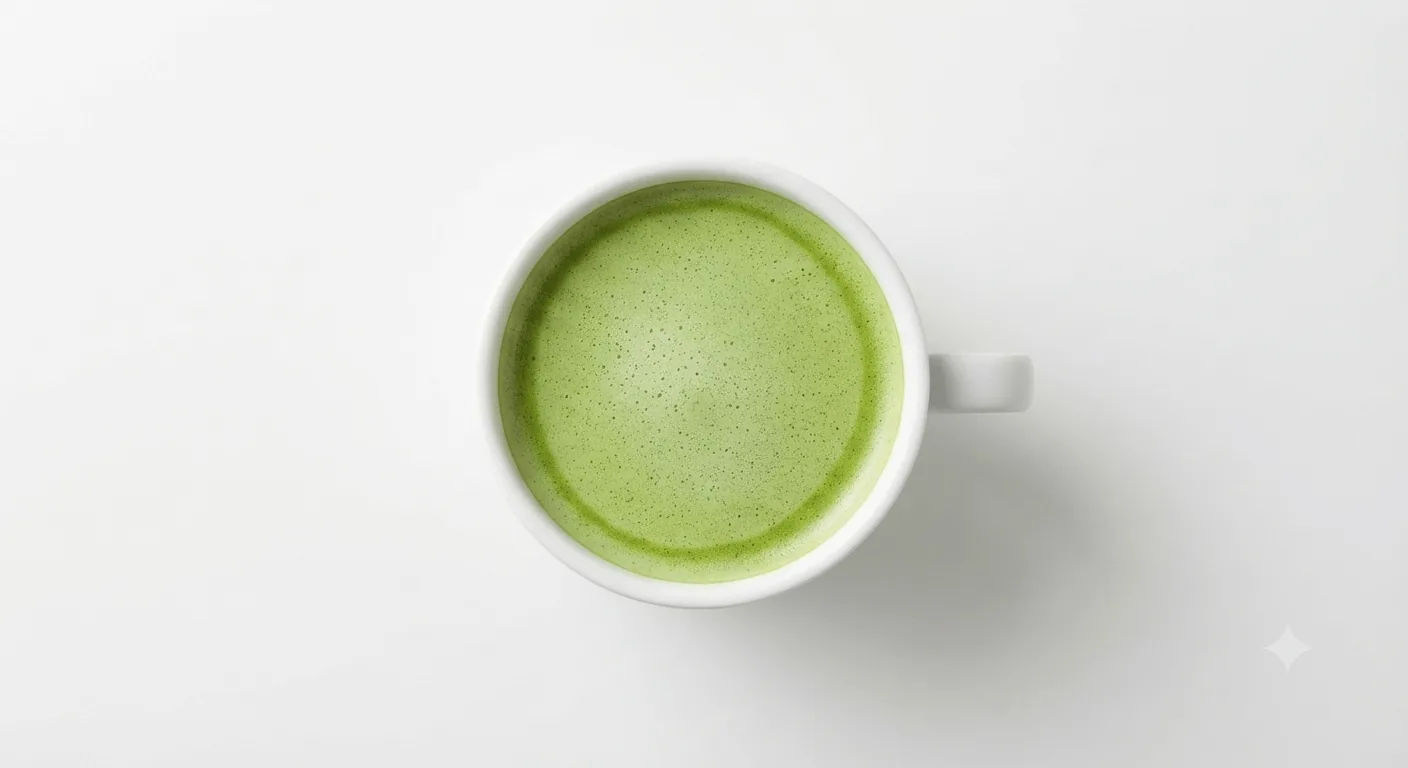
A Semi-skimmed milk, Tall of Starbucks Matcha Tea Latte contains 190 kcal, 28.5g of sugar (7.1 teaspoons) and 80mg of caffeine. It is classified as NOVA 4 under the NOVA food processing classification system.
Dietary: Vegetarian | Allergens: Milk
Nutrition by serving: Starbucks Matcha Tea Latte
| Serving | Calories | Salt | Sugar | = teaspoons | Protein |
|---|---|---|---|---|---|
| Semi-skimmed milk (Tall) | 190 kcal | 0.29g | 28.5g | 7.1 tsp | 8.4g |
| Whole milk (Tall) | 228 kcal | 0.28g | 28.2g | 7.1 tsp | 8.2g |
| Skimmed milk (Tall) | 158 kcal | 0.29g | 28.7g | 7.2 tsp | 8.4g |
| Oat milk (Tall) | 212 kcal | 0.33g | 22.5g | 5.6 tsp | 2.1g |
| Almond milk (Tall) | 133 kcal | 0.21g | 23g | 5.8 tsp | 1.3g |
| Soya milk (Tall) | 174 kcal | 0.27g | 23.4g | 5.9 tsp | 7.9g |
| Coconut milk (Tall) | 165 kcal | 0.14g | 24.2g | 6.1 tsp | 2.5g |
Salt amber above 20% of 6g adult daily limit, red above 75%. Sugar in teaspoons at 4g each.
Starbucks Matcha Tea Latte contains 28.5g of sugar per Semi-skimmed milk, Tall (7.1 teaspoons). Sugar level: High. The table below shows how this compares to daily free sugar limits across all age groups.
Sugar by portion: Starbucks Matcha Tea Latte
| Portion | Adult (female) 30g | Adult (male) 30g | Age 11 to 17 30g | Age 7 to 10 24g | Age 4 to 6 19g |
|---|---|---|---|---|---|
| Semi-skimmed milk, Tall | 28.5g 95% | 28.5g 95% | 28.5g 95% | 28.5g 119% | 28.5g 150% |
| Teaspoons | 7.1 tsp | ||||
Percentage shown is % of daily reference intake for each age group.
Starbucks Matcha Tea Latte contains 0.29g of salt per Semi-skimmed milk, Tall. Salt level: Low. The table below shows how this compares to daily salt limits for adults and children.
Salt by portion: Starbucks Matcha Tea Latte
| Portion | Adult (female) 6g | Adult (male) 6g | Age 11 to 17 6g | Age 7 to 10 5g | Age 4 to 6 3g |
|---|---|---|---|---|---|
| Semi-skimmed milk, Tall | 0.29g 5% | 0.29g 5% | 0.29g 5% | 0.29g 6% | 0.29g 10% |
Percentage shown is % of daily reference intake for each age group.
Calories by portion: Starbucks Matcha Tea Latte
| Portion | Adult (female) 2000 kcal | Adult (male) 2500 kcal | Age 11 to 17 1936 kcal | Age 7 to 10 1553 kcal | Age 4 to 6 1291 kcal |
|---|---|---|---|---|---|
| Semi-skimmed milk, Tall | 190 kcal 10% | 190 kcal 8% | 190 kcal 10% | 190 kcal 12% | 190 kcal 15% |
Percentage shown is % of daily reference intake for each age group.
Saturated fat by portion: Starbucks Matcha Tea Latte
| Portion | Adult (female) 20g | Adult (male) 30g | Age 11 to 17 20g | Age 7 to 10 18g | Age 4 to 6 16g |
|---|---|---|---|---|---|
| Semi-skimmed milk, Tall | 2.6g 13% | 2.6g 9% | 2.6g 13% | 2.6g 14% | 2.6g 16% |
Percentage shown is % of daily reference intake for each age group.
NOVA 4: ultra-processed food
Contains matcha blend with added sugar (not pure matcha) — processed ingredient.
The NOVA classification system groups foods by the extent and purpose of processing. NOVA 4 covers products containing industrial additives not typically used in home cooking.
Ingredients
Steamed milk, matcha blend (sugar, green tea powder). Milk options available.
Allergen information: Starbucks Matcha Tea Latte
| Milk | Present |
| Wheat / Gluten | Not present |
| Egg | Not present |
| Soya | Not present |
| Peanuts | Not present |
| Tree Nuts | Not present |
| Fish | Not present |
| Shellfish | Not present |
| Celery | Not present |
| Mustard | Not present |
| Sesame | Not present |
| Lupin | Not present |
| Molluscs | Not present |
| Sulphur Dioxide / Sulphites | Not present |
Starbucks prepares beverages and food in stores where all 14 major allergens are present. Cross-contamination cannot be guaranteed. Always tell your barista if you have a severe allergy.
Starbucks Matcha Tea Latte with semi-skimmed milk contains 173 kcal in a Tall — 9% of the adult 2,000 kcal daily reference intake. Calories vary with size and milk: a Tall with whole milk is approximately 200 kcal, with almond milk approximately 110 kcal. The matcha blend contributes a fixed calorie base per size, with milk type accounting for the remainder. A Grande with semi-skimmed milk contains approximately 240 kcal and a Venti approximately 310 kcal.
Tall with semi-skimmed milk: 173 kcal, 3.2g saturated fat, 21g sugar, 7g protein, 0.28g salt, 55mg caffeine. Tall with whole milk: approximately 200 kcal, 4.8g saturated fat, 20.8g sugar, 6.8g protein. Tall with skimmed milk: approximately 145 kcal, 0.2g saturated fat, 21.2g sugar, 7g protein. Tall with oat milk: approximately 185 kcal, 0.3g saturated fat, 16.5g sugar, 1.8g protein. Tall with almond milk: approximately 110 kcal, 0.1g saturated fat, 16.2g sugar, 1.0g protein — the lowest calorie and lowest sugar option. Tall with soya milk: approximately 153 kcal, 0.5g saturated fat, 16.6g sugar, 6.8g protein. As with the Chai Tea Latte, switching from dairy to plant milk reduces sugar significantly because dairy contributes lactose on top of the sweetened matcha base.
Starbucks Matcha Tea Latte with semi-skimmed milk contains 21g of sugar in a Tall — 5.3 teaspoons and 70% of the adult daily free sugar limit of 30g. For a child aged 4 to 6, this uses 111% of their daily free sugar limit. A Grande with semi-skimmed milk contains approximately 28g and a Venti approximately 37g. With plant milks the sugar drops to approximately 16-17g per Tall as dairy lactose is removed from the equation. Crucially, the matcha powder blend used at Starbucks contains added sugar — unlike ceremonial grade matcha which has no sugar added — meaning the sugar in this drink cannot be reduced by any milk or size customisation alone. The NHS free sugar limit is 30g per day for adults, 24g for children aged 7 to 10, and 19g for children aged 4 to 6.
Starbucks Matcha Tea Latte contains approximately 55mg of caffeine in a Tall regardless of milk choice — the caffeine comes from the matcha powder itself. A Grande contains approximately 75mg and a Venti approximately 110mg. Matcha contains caffeine alongside L-theanine — an amino acid that modulates caffeine absorption and is associated with a calmer, more sustained energy effect than the sharper spike from espresso. For context, a single espresso shot at Starbucks contains approximately 75mg of caffeine — a Tall Matcha Tea Latte is lower than a single espresso. The NHS recommends a maximum of 400mg per day for most adults and 200mg during pregnancy — a Venti Matcha Tea Latte uses 28% and 55% of these limits respectively.
Starbucks Matcha Tea Latte with semi-skimmed milk contains 0.28g of salt in a Tall — 5% of the adult daily limit and 9% of the daily limit for a child aged 4 to 6. Salt is low across all milk variants and not a significant nutritional consideration. It comes from the naturally occurring sodium in the milk or milk alternative. The matcha powder blend itself contributes negligible salt.
Starbucks Matcha Tea Latte with semi-skimmed milk contains 3.2g of saturated fat in a Tall — 16% of the adult daily guideline. With whole milk it rises to approximately 4.8g, with skimmed milk it falls to approximately 0.2g. Plant milks are all low: oat milk approximately 0.3g, almond milk approximately 0.1g, soya milk approximately 0.5g. Saturated fat is not a significant concern across any milk variant for a Tall Matcha Tea Latte.
Starbucks Matcha Tea Latte with semi-skimmed milk contains 7g of protein in a Tall — 14% of the adult daily reference intake. Protein varies significantly with milk choice: dairy and soya milk deliver 6.8-7g per Tall. Oat milk delivers approximately 1.8g, almond milk approximately 1g. As with all milk-based drinks, dairy and soya milk are the only options providing meaningful protein. The matcha powder itself contributes negligible protein.
Yes. NOVA 4, ultra-processed. The matcha powder blend used at Starbucks contains added sugar and flavourings — it is not ceremonial or culinary grade matcha, which is simply stone-ground green tea leaves with no additives. The commercial blend format with added sugar and flavourings places it in NOVA 4. A home-made matcha latte using high-quality unsweetened matcha powder and milk would be NOVA 1 or NOVA 2 depending on the matcha grade used — and would allow full control over the sugar content.
Starbucks Matcha Tea Latte contains milk as the only declared allergen when made with dairy milk. The matcha powder blend contains no major allergens. Switching to soya milk adds soya as a declared allergen. Switching to oat milk may add a gluten cross-contamination consideration depending on the oat milk used. It does not contain wheat/gluten, egg, peanuts, tree nuts, fish, shellfish, celery, mustard, sesame, lupin, molluscs or sulphites in any standard dairy or plant milk variant. Always tell your barista if you have a severe allergy before ordering.
Starbucks Matcha Tea Latte is suitable for vegetarians with any milk. It is suitable for vegans when ordered with a plant-based milk — oat, almond, soya or coconut milk. The matcha blend itself contains no animal-derived ingredients. For vegans the lowest sugar plant milk option is almond milk at approximately 16.2g per Tall; for vegans prioritising protein, soya milk at approximately 6.8g protein per Tall is the closest equivalent to the dairy version.
Starbucks Matcha Tea Latte is not appropriate for younger children. The caffeine at 55mg per Tall is above safe levels for children under approximately 18kg based on FSA guidance. The sugar at 21g per semi-skimmed Tall uses 111% of the daily free sugar limit for a child aged 4 to 6. Even with almond milk the sugar at approximately 16.2g falls below the child's 19g daily limit — making the almond milk Tall the only combination that keeps sugar within the child's daily limit, but the caffeine content remains a concern at any size for children.
Almond milk produces the lowest sugar Matcha Tea Latte at approximately 16.2g per Tall — 54% of the adult daily free sugar limit. Oat milk is approximately 16.5g and soya milk approximately 16.6g. All plant milks are significantly lower in sugar than dairy variants because dairy milk contributes lactose on top of the sweetened matcha base. Skimmed milk at approximately 21.2g is actually the highest sugar dairy variant because the relative lactose concentration increases as fat is removed. The only way to materially reduce sugar in a Matcha Tea Latte at Starbucks is to switch to a plant-based milk — the sugar in the matcha blend itself cannot be removed.
A Tall Matcha Tea Latte with semi-skimmed milk contains 173 kcal and 21g sugar versus 193 kcal and 28g sugar in a semi-skimmed Chai Tea Latte — 20 fewer calories and 7g less sugar. Caffeine is lower at 55mg versus 70mg. Both have milk as the only declared allergen. Both are NOVA 4 from their respective sweetened concentrate or powder blends. On every nutritional measure the Matcha Tea Latte is the more moderate choice — lower in calories, lower in sugar and lower in caffeine — though both exceed 70% of the adult daily free sugar limit in a Tall with dairy milk.
At 21g of sugar a semi-skimmed Tall Matcha Tea Latte uses 70% of the adult daily free sugar limit before any food is added. Pairing with a Butter Croissant adds 5.4g — a combined total of 26.4g, still within the adult limit. Pairing with a Blueberry Muffin adds 30g — a combined total of 51g, well over the adult daily limit. Pairing with a Classic Porridge adds 8.7g of naturally occurring lactose sugar — a combined total of 29.7g, just within the adult daily limit. The Matcha Tea Latte with a plain croissant or porridge is one of the few sweet drink and food combinations at Starbucks that keeps the combined total within the adult daily free sugar limit.
Starbucks Matcha Tea Latte is one of the lower sugar flavoured hot lattes at Starbucks — 21g per semi-skimmed Tall versus 28g in the Chai Tea Latte and 23g in the Caramel Macchiato. Only one allergen is declared with dairy milk. It is suitable for vegetarians and can be made vegan with plant-based milk. The 55mg caffeine per Tall is the lowest of any caffeinated hot drink at Starbucks. The L-theanine content from the matcha may moderate the caffeine effect relative to an espresso-based drink. For adults who want a flavoured hot latte with a gentle caffeine effect and relatively lower sugar, the Matcha Tea Latte is the best choice in the Starbucks hot latte range — with almond milk reducing sugar further to approximately 16g per Tall.