

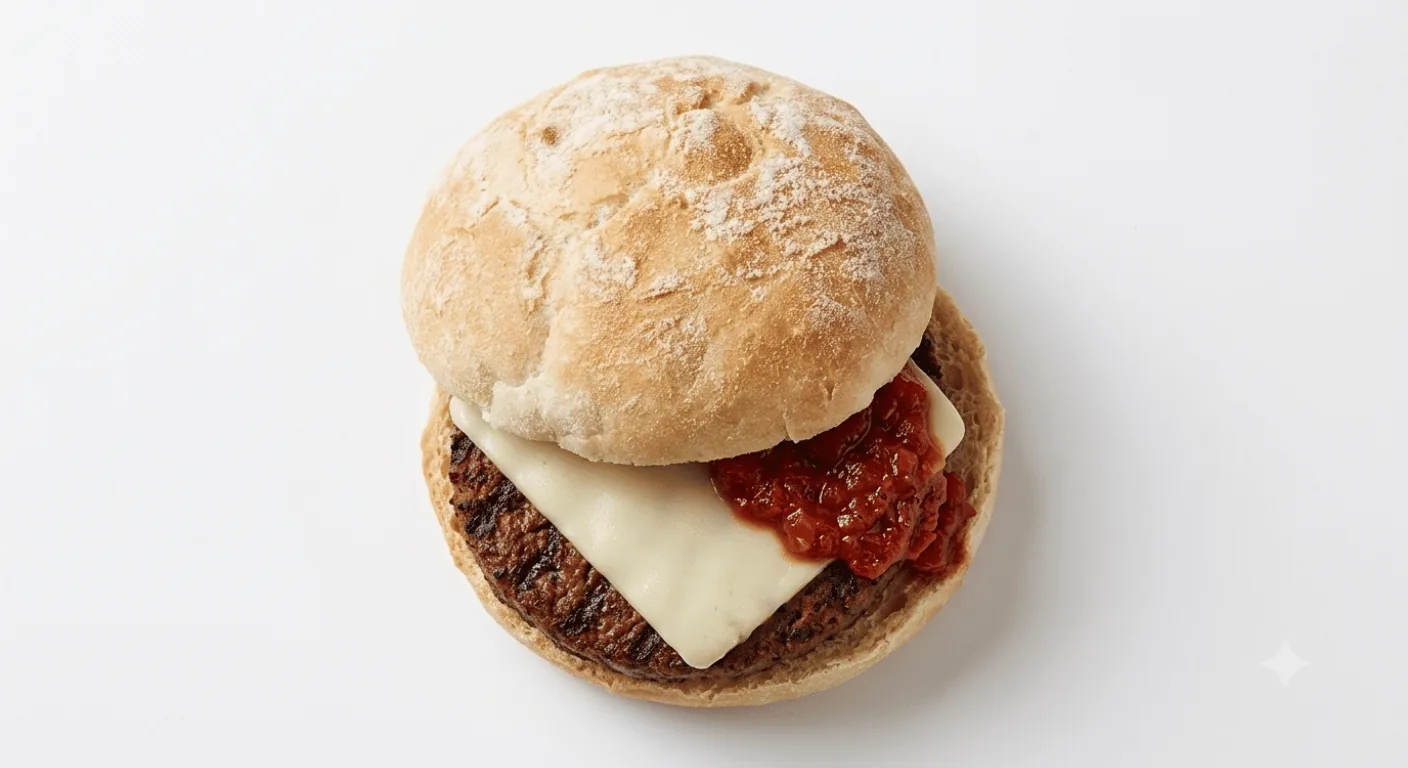
Per sandwich of Starbucks Beyond Meat Breakfast Sandwich contains 432 kcal, 3.1g of sugar (0.8 teaspoons) and 2.1g of salt. It is classified as NOVA 4 under the NOVA food processing classification system.
Dietary: Vegan | Allergens: Wheat / Gluten, Soya
Starbucks Beyond Meat Breakfast Sandwich contains 432 kcal, 17g of fat (8.9g saturated), 46g of carbohydrate (3.1g sugar), 21g of protein and 2.1g of salt per per sandwich.
Nutrition by serving: Starbucks Beyond Meat Breakfast Sandwich
| Serving | Calories | Salt | Sugar | = teaspoons | Carbs | Protein |
|---|---|---|---|---|---|---|
| Per sandwich | 432 kcal | 2.1g | 3.1g | 0.8 tsp | 46g | 21g |
Salt amber above 20% of 6g adult daily limit, red above 75%. Sugar in teaspoons at 4g each.
Starbucks Beyond Meat Breakfast Sandwich contains 3.1g of sugar per per sandwich (0.8 teaspoons). Sugar level: Low. The table below shows how this compares to daily free sugar limits across all age groups.
Sugar by portion: Starbucks Beyond Meat Breakfast Sandwich
| Portion | Adult (female) 30g | Adult (male) 30g | Age 11 to 17 30g | Age 7 to 10 24g | Age 4 to 6 19g |
|---|---|---|---|---|---|
| Per sandwich | 3.1g 10% | 3.1g 10% | 3.1g 10% | 3.1g 13% | 3.1g 16% |
| Teaspoons | 0.8 tsp | ||||
Percentage shown is % of daily reference intake for each age group.
Starbucks Beyond Meat Breakfast Sandwich contains 2.1g of salt per per sandwich. Salt level: Moderate. The table below shows how this compares to daily salt limits for adults and children.
Salt by portion: Starbucks Beyond Meat Breakfast Sandwich
| Portion | Adult (female) 6g | Adult (male) 6g | Age 11 to 17 6g | Age 7 to 10 5g | Age 4 to 6 3g |
|---|---|---|---|---|---|
| Per sandwich | 2.1g 35% | 2.1g 35% | 2.1g 35% | 2.1g 42% | 2.1g 70% |
Percentage shown is % of daily reference intake for each age group.
Calories by portion: Starbucks Beyond Meat Breakfast Sandwich
| Portion | Adult (female) 2000 kcal | Adult (male) 2500 kcal | Age 11 to 17 1936 kcal | Age 7 to 10 1553 kcal | Age 4 to 6 1291 kcal |
|---|---|---|---|---|---|
| Per sandwich | 432 kcal 22% | 432 kcal 17% | 432 kcal 22% | 432 kcal 28% | 432 kcal 33% |
Percentage shown is % of daily reference intake for each age group.
Saturated fat by portion: Starbucks Beyond Meat Breakfast Sandwich
| Portion | Adult (female) 20g | Adult (male) 30g | Age 11 to 17 20g | Age 7 to 10 18g | Age 4 to 6 16g |
|---|---|---|---|---|---|
| Per sandwich | 8.9g 45% | 8.9g 30% | 8.9g 45% | 8.9g 49% | 8.9g 56% |
Percentage shown is % of daily reference intake for each age group.
Processing and additives: Starbucks Beyond Meat Breakfast Sandwich
Starbucks Beyond Meat Breakfast Sandwich is assembled from 7 separately manufactured components. Reading the ingredient list closely, it contains flour treatment agents, stabilisers, emulsifiers, acidity regulators, colours and thickeners. These are not there to add nutritional value. They make industrial production and distribution possible.
Flour treatment agents
Strengthen dough so it handles and proves consistently at scale.
Stabilisers
Stop the mixture separating or settling over its shelf life.
Emulsifiers
Keep fat and water mixed so the texture stays even and does not separate.
Acidity regulators
Hold the ph steady so flavour and shelf life stay consistent.
Colours
Restore or standardise appearance after processing.
Thickeners
Build body and mouthfeel without adding fat or solids.
Boone classifies Starbucks Beyond Meat Breakfast Sandwich as NOVA group 4, ultra-processed, based on the ingredients named above. NOVA groups foods by how far they are from their whole-food form, not by how nutritious they are. A group 4 food is not automatically unhealthy, and a group 1 food is not automatically healthy. Read from the published ingredient list, Retrieved 28 August 2026.
A Starbucks Beyond Meat Breakfast Sandwich contains at least 64 distinct ingredients: 41 raw and 23 manufactured.
Ingredient count by order: Starbucks Beyond Meat Breakfast Sandwich
| What you order | Raw | Manufactured | Total | % manufactured |
|---|---|---|---|---|
| Starbucks Beyond Meat Breakfast Sandwich on its own | 41 | 23 | 64 | 36% |
The 23 manufactured ingredients
apple extract, apple fibre, ascorbic acid, beta carotene, carrageenan, carrot powder, citric acid, concentrated lemon juice, flavouring, garlic powder, lactic acid, maize vinegar, methylcellulose, modified starch, olive extract, onion powder, pomegranate extract, smoke flavouring, soya protein concentrate, spices, sunflower lecithin, tricalcium citrate, vitamin b12.
The 41 raw ingredients
black pepper, calcium, coconut oil, cornflour, dried yeast, durum wheat semolina, folic acid, garlic, garlic purée, ginger purée, ground turmeric, iron, lemon juice, malted wheat flour, niacin, nigari, olive oil, onion, oregano, pea protein, rapeseed oil, red chilli purée, red wine vinegar, refined coconut oil, rice protein, roasted tomatoes, rowanberry extract, rye flour, salt, sea salt, soya beans, sugar, sunflower oil, thiamin, tomato concentrate, tomato juice, tomato paste, tomatoes, water, wheat flour, yeast.
What those ingredients are, by type
Boone counts every distinct named ingredient on the Starbucks published component lists, including sub-ingredients, and removes duplicates, so milk appearing in three components counts once. Additive class names are dropped and the named substance kept, so "stabiliser: guar gum" counts guar gum once. Raw covers whole foods and basic kitchen staples such as water, coffee, milk, sugar and salt. Manufactured covers substances that only exist as an output of industrial processing. Figures are for the standard build; syrups, cold foams, whipped cream and drizzles added to order are not included. Retrieved 28 August 2026.
Ingredients by component: Starbucks Beyond Meat Breakfast Sandwich
Breakfast roll
wheat flour [WHEAT flour, calcium, folic acid, iron, niacin, thiamin], water, RYE flour, yeast, durum WHEAT semolina, malted WHEAT flour, salt, rapeseed oil, flour treatment agent: ascorbic acid
Beyond Meat ® plant-based patty
water, pea protein, rapeseed oil, refined coconut oil, flavouring, dried yeast, rice protein, stabiliser: methylcellulose, apple fibre, smoke flavouring, spices, salt, apple extract, maize vinegar, concentrated lemon juice, pomegranate extract, garlic powder, onion powder, emulsifier: sunflower lecithin, carrot powder
coconut oil alternative to cheese
water, modified starch, coconut oil, sea salt, rowanberry extract, flavouring, acidity regulator: citric acid, olive extract, colour: beta carotene, vitamin B12
tofu
water, SOYA beans, sea salt, nigari
signature tomato relish
water, sugar, tomato paste, tomatoes, red wine vinegar, roasted tomatoes [roasted tomatoes, tomato concentrate, sunflower oil, olive oil, salt, oregano, sugar, garlic], tomato juice, rapeseed oil, red chilli purée, cornflour, onion, lemon juice, garlic purée, ginger purée, salt, oregano, black pepper, acidity regulator : citric acid
Sheese ® coconut oil alternative to cheese
water, coconut oil, SOYA protein concentrate, salt, acidity regulator: lactic acid, sugar, tricalcium citrate, thickener: carrageenan, flavouring
ground turmeric
Single ingredient.
Source: Starbucks UK Nutrition and Allergen Guide, Summer 2026 Ready-to-Eat edition, page 12. Retrieved 28 August 2026.
Starbucks Beyond Meat Breakfast Sandwich contains wheat, rye and soya as declared ingredients.
Allergen information: Starbucks Beyond Meat Breakfast Sandwich
| Allergen | Status |
|---|---|
| Wheat | Contains |
| Rye | Contains |
| Barley | Not present |
| Oats | Not present |
| Spelt | Not present |
| Tree nuts | Not present |
| Peanuts | Not present |
| Sesame | Not present |
| Soya | Contains |
| Milk | Not present |
| Eggs | Not present |
| Fish | Not present |
| Crustaceans | Not present |
| Molluscs | Not present |
| Celery | Not present |
| Mustard | Not present |
| Lupin | Not present |
| Sulphur dioxide and sulphites | Not present |
Contains = declared as an ingredient in the Starbucks UK Nutrition and Allergen Guide. Starbucks prepares drinks and food in stores where all 14 major allergens are present and equipment, jugs and steam wands are shared, so no item can be guaranteed allergen free, even when ingredients are left out on request. Ask a barista before ordering if you have an allergy. Retrieved 28 August 2026.
Starbucks Beyond Meat Breakfast Sandwich contains 432 kcal per sandwich — 22% of the adult 2,000 kcal daily reference intake, 28% for a child aged 7 to 10, and 33% for a child aged 4 to 6. It is the highest calorie vegan breakfast option at Starbucks and the second highest calorie breakfast sandwich overall, behind only the Traditional Sausage Sandwich at 495 kcal. The combination of the Beyond Meat patty, coconut oil-based cheese alternative and breakfast roll drives the calorie total.
Per sandwich: 432 kcal, 17g fat (8.9g saturated), 46g carbohydrate (3.1g sugar), 21g protein, 2.1g salt. The saturated fat at 8.9g is 45% of the adult daily guideline of 20g — high for a vegan item and reflects the coconut oil content in both the Beyond Meat patty and the coconut oil cheese alternative. The sugar at 3.1g is 10% of the adult daily free sugar limit of 30g. The salt at 2.1g is 35% of the adult daily limit of 6g.
Starbucks Beyond Meat Breakfast Sandwich contains 3.1g of sugar per sandwich — 0.8 teaspoons and 10% of the adult daily free sugar limit of 30g. For a child aged 4 to 6, this uses 16% of their daily free sugar limit. The sugar is low for a breakfast sandwich and comes from the roll and the small amount of sugar in the tomato relish and Beyond Meat patty recipe rather than any added sweetener. The NHS free sugar limit is 30g per day for adults, 24g for children aged 7 to 10, and 19g for children aged 4 to 6.
Starbucks Beyond Meat Breakfast Sandwich contains 2.1g of salt per sandwich — 35% of the adult daily limit of 6g and 70% of the daily limit for a child aged 4 to 6. This is the highest salt of any breakfast sandwich at Starbucks and the highest salt vegan item on the entire menu. The salt comes from the Beyond Meat patty — which contains salt as a significant seasoning ingredient to replicate the flavour of meat — the coconut oil cheese alternative and the breakfast roll. Salt is a key flavour component in plant-based meat alternatives to achieve a convincing savoury taste.
Starbucks Beyond Meat Breakfast Sandwich contains 8.9g of saturated fat per sandwich — 45% of the adult daily guideline of 20g and 56% for a child aged 4 to 6. This is unexpectedly high for a vegan item. The saturated fat comes from two sources of coconut oil: the coconut oil used in the Beyond Meat patty itself, and the coconut oil in the two different coconut oil-based cheese alternatives used in the recipe. Coconut oil is one of the most saturated fats in the food supply, higher in saturated fat per gram than butter.
Starbucks Beyond Meat Breakfast Sandwich contains 21g of protein per sandwich — 42% of the adult daily reference intake of 50g. The protein comes primarily from the pea protein isolate in the Beyond Meat patty, which makes up 50% of the patty by weight. Pea protein is a high-quality plant protein that provides a complete amino acid profile. At 21g for 432 kcal the protein-to-calorie ratio is comparable to the Smoked Bacon Roll at 21g for 400 kcal, though the higher calorie count slightly reduces the efficiency of the vegan option.
Yes. Starbucks Beyond Meat Breakfast Sandwich is suitable for vegans and vegetarians. It contains no animal-derived ingredients. The cheese alternative uses coconut oil and starch rather than dairy. The Beyond Meat patty uses pea protein, rice protein and mung bean protein rather than meat or egg. It is the only vegan hot breakfast sandwich at Starbucks. Starbucks prepares food in stores where all 14 major allergens are present — cross-contamination with dairy or egg cannot be fully guaranteed.
Yes. NOVA 4, ultra-processed — and it has one of the most complex ingredient lists of any item at Starbucks. The Beyond Meat patty contains methylcellulose as a binder, sunflower lecithin as an emulsifier, pomegranate extract as a colour, dipotassium phosphate as a mineral and smoke flavouring. One coconut oil cheese alternative contains modified maize starch and carrageenan — a controversial emulsifier derived from seaweed. A second coconut oil cheese alternative contains rowanberry extract as a colour and maltodextrin. Industrial additives are present throughout every component of the sandwich.
Starbucks Beyond Meat Breakfast Sandwich contains wheat/gluten and soya as declared allergens. The wheat comes from the breakfast roll. The soya comes from the soya protein concentrate used alongside the pea protein in the Beyond Meat patty. It does not contain milk, egg, peanuts, tree nuts, fish, shellfish, celery, mustard, sesame, lupin, molluscs or sulphites. The absence of milk and egg as declared allergens is notable for a breakfast sandwich — reflecting the entirely plant-based recipe. Always tell your barista if you have a severe allergy before ordering.
At 2.1g of salt — 70% of the daily limit for a child aged 4 to 6 — the Beyond Meat Breakfast Sandwich is not appropriate for younger children. The 8.9g saturated fat from coconut oil uses 56% of their daily guideline. At 432 kcal it is the highest calorie vegan breakfast option at Starbucks, representing 33% of the daily calorie need for a child aged 4 to 6. Despite being vegan and containing no nitrites, the salt and saturated fat content make it unsuitable as a children's breakfast choice. For younger children, the Classic Porridge or Egg White Bites are considerably more appropriate.
Starbucks Beyond Meat Breakfast Sandwich contains 8.9g of saturated fat — 45% of the adult daily guideline — despite containing no animal products. This is because coconut oil is used in two separate components: the Beyond Meat patty itself and two different coconut oil-based cheese alternatives. Coconut oil is approximately 90% saturated fat by composition — higher than butter at around 63% — making it one of the most saturated plant-derived fats available. The use of coconut oil as the fat source in plant-based cheese alternatives is common due to its melting properties, but it significantly elevates the saturated fat content compared to dairy-based alternatives.
At 3.1g of sugar the Beyond Meat Breakfast Sandwich leaves significant room for a drink. A plain oat milk Cappuccino or Flat White adds around 6-9g from oat milk, keeping the total at 9.1-12.1g — well within the adult daily limit. A Caramel Macchiato with oat milk adds around 23g, bringing the total to 26.1g — within the adult limit. Given the already high salt at 2.1g and saturated fat at 8.9g in the sandwich, an unsweetened Americano or herbal tea is the most appropriate pairing on overall nutritional grounds.
The Beyond Meat Breakfast Sandwich contains 432 kcal versus 400 kcal in the Smoked Bacon Roll — 32 more calories. Salt is lower at 2.1g versus 2.3g. Saturated fat is higher at 8.9g versus 4.5g — reflecting the coconut oil content. Protein is the same at 21g. The Beyond Meat option contains no nitrites; the Smoked Bacon Roll contains both sodium nitrite and potassium nitrate. The Beyond Meat Sandwich has a more complex ingredient list with methylcellulose, carrageenan and smoke flavouring; the Smoked Bacon Roll's additive profile is simpler. For vegans, the Beyond Meat Sandwich is the only option. For those avoiding nitrites, it is also preferable to the Bacon Roll despite its higher saturated fat.
Starbucks Beyond Meat Breakfast Sandwich is the only vegan hot breakfast sandwich at Starbucks — a meaningful distinction for those following a plant-based diet. It delivers 21g of protein from pea, rice and mung bean proteins with no nitrites, no dairy and no egg. The trade-offs are the 2.1g salt — the highest of any breakfast sandwich — and the 8.9g saturated fat from coconut oil that is higher than most dairy-containing breakfast items. The ingredient list with methylcellulose, carrageenan and smoke flavouring is the most complex of any breakfast item. Only two allergens are declared — wheat and soya. For vegan adults prioritising protein and avoiding nitrites, it is the only breakfast sandwich option at Starbucks, with the salt and saturated fat content being the primary nutritional trade-offs.