
Free UK delivery on all orders · At-home saliva test · Secure checkout
Free UK delivery on all orders

Shredded Wheat nutrition: sugar, fibre, protein, fortification and more

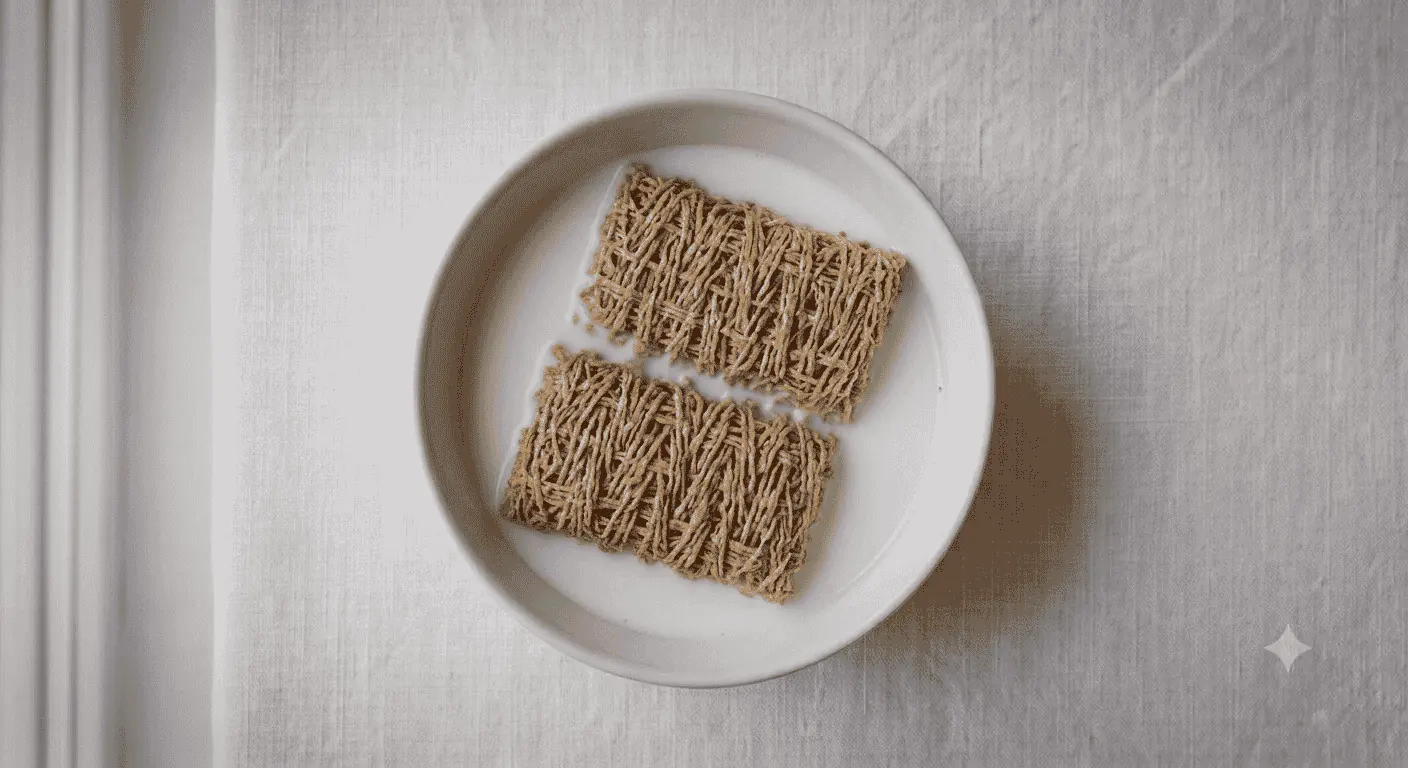
Bowl of Nestlé Shredded Wheat biscuits with milk — sugar, calories and fibre nutrition breakdown

How much sugar is in Shredded Wheat? A 30g bowl with milk contains just 0.2g of free sugar, alongside 3.3g of fibre and 7.8g of protein. At 0.5g of sugar per 100g, Shredded Wheat is one of the lower-sugar cereals in this guide.

Try it: interactive cereal calculator

Use the calculator to adjust portion size and milk type, then see how the bowl compares to NHS daily limits for your child's age and gender.

Cereal calculator
What is in your bowl?
Choose a cereal, set the portion size and milk type, then see the total against NHS daily limits.
30g

Your bowl--
Free sugar
--
--
0--
--
Calories
--
--
0--
--
Salt
--
--
0--
--
Milk sugar (lactose) does not count as free sugar under NHS guidelines. Only the added sugar in the cereal counts toward the daily limit.

Sugar, calories and salt by bowl size

The figures below show total sugar, calories and salt for four bowl sizes, each with 125ml of semi-skimmed milk. The full packet figure shows the dry cereal only.

Small bowl
30g with milk
30g cereal + 125ml semi-skimmed milk
0.2g
sugar
157
kcal
0.2g
salt
0.2g free sugar from the cereal (milk lactose is not free sugar). 1% of the daily limit for a child aged 7 to 10.
Standard bowl
40g with milk
40g cereal + 125ml semi-skimmed milk
0.2g
sugar
189
kcal
0.2g
salt
0.2g free sugar from the cereal (milk lactose is not free sugar). 1% of the daily limit for a child aged 7 to 10.
Larger bowl
50g with milk
50g cereal + 125ml semi-skimmed milk
0.3g
sugar
222
kcal
0.2g
salt
0.3g free sugar from the cereal (milk lactose is not free sugar). 1% of the daily limit for a child aged 7 to 10.
Large bowl
60g with milk
60g cereal + 125ml semi-skimmed milk
0.3g
sugar
254
kcal
0.2g
salt
0.3g free sugar from the cereal (milk lactose is not free sugar). 1% of the daily limit for a child aged 7 to 10.
Full packet
Full 540g packet (cereal only)
Entire packet, no milk
2.7g
sugar
1755
kcal
0.2g
salt
2.7g free sugar in the full packet. 9% of the adult daily limit of 30g.

All portion figures include 125ml semi-skimmed milk. Milk sugar (lactose) does not count as free sugar under NHS guidelines and is excluded from the sugar totals. Milk calories and salt are included.

Sugar

Nestle Shredded Wheat contains 0.5g of sugar per 100g. A 30g bowl delivers 0.2g of free sugar before milk is added, and a 40g bowl delivers 0.2g. Shredded Wheat is made from a single ingredient, 100% whole grain wheat, with no added sugar, salt or vitamins. Two biscuits weigh 45g and contain 162 kcal.

All added sugar in Shredded Wheat counts as free sugar under NHS guidelines. Milk lactose does not count as free sugar and is excluded from these figures.

A 30g bowl of Shredded Wheat provides only 1% of the daily free sugar limit for a child aged 7 to 10, leaving most of the day's free sugar allowance for other meals and snacks.

Shredded Wheat is one of the lower-sugar cereals in this guide

Nestle Shredded Wheat contains only 0.5g of sugar per 100g, among the lowest of any cereal covered here. A 30g bowl delivers just 0.2g of free sugar, 1% of the daily limit for a child aged 7 to 10. Shredded Wheat is made from a single ingredient, 100% whole grain wheat, with no added sugar, salt or vitamins. Two biscuits weigh 45g and contain 162 kcal.

NHS recommended daily free sugar limits

Age 4 to 6No more than 19g per day
Age 7 to 10No more than 24g per day
Age 11 and overNo more than 30g per day

Source: NHS. Free sugars include all added sugars. Milk lactose does not count as free sugar.

The table below shows a standard 30g bowl as a percentage of the daily free sugar limit for each age group (cereal sugar only, no milk).

Free sugar as % of daily NHS limit: 30gg Shredded Wheat (0.2gg sugar, no milk)

AgeDaily limit30gg bowl
Age 4 to 619g1%
Age 7 to 1024g1%
Age 11 and over30g1%
Adult30g1%

Source: NHS/SACN free sugar guidelines (2015). Sugar from the cereal only. Milk lactose is excluded.

Calories

A 30g bowl of Shredded Wheat with 125ml semi-skimmed milk contains approximately 157 calories. At 60g with milk the bowl contains approximately 254 calories.

For a child aged 4 to 6, a 30g bowl represents around 11% of their estimated daily calorie requirement, a reasonable contribution from breakfast.

Calories: Shredded Wheat by portion size (with 125ml semi-skimmed milk)

30g
157 kcal
40g
189 kcal
50g
222 kcal
60g
254 kcal

Includes 59 kcal from 125ml semi-skimmed milk. Cereal only: 98 kcal at 30g, 195 kcal at 60g.

Fibre

Shredded Wheat contains 11g of fibre per 100g, which is 3.3g in a 30g bowl. This is high for a breakfast cereal and a genuinely useful contribution toward the daily fibre target.

The NHS recommends adults consume around 30g of fibre per day, and most people in the UK fall short of this. A 30g bowl of Shredded Wheat provides 3.3g, around 11% of the adult daily target from a single bowl.

Protein

Shredded Wheat contains 12g of protein per 100g, which is 3.6g in a 30g bowl before milk. With 125ml of semi-skimmed milk, which contributes approximately 4.2g of protein, the total reaches 7.8g.

Most of the protein in a bowl of cereal with milk comes from the milk itself rather than the cereal. This is true across almost all breakfast cereals, including higher-protein options like Shredded Wheat.

For a child aged 7 to 10, a general guide for daily protein intake is around 24g. A 30g bowl of Shredded Wheat with milk provides 7.8g, a useful contribution from breakfast, primarily via the milk.

Fibre and protein: 30g bowl with 125ml semi-skimmed milk

Fibre3.3g of 30g target
11%
Protein7.8g of 24g target
33%

Adult fibre target: 30g per day (SACN). Child protein target shown: 24g per day (a guide for a 7 to 10 year old). Most of the protein in a bowl comes from the milk, not the cereal.

Fortification, vitamins and minerals

Nestle Shredded Wheat is not fortified with added vitamins or minerals. The nutrient content comes entirely from the wheat used to make it, without any vitamins or minerals added during manufacturing.

This means Shredded Wheat will not contribute toward reference intakes for vitamin D, B vitamins or iron in the way that fortified cereals do. Wholegrain cereals naturally contain some B vitamins, magnesium and iron from the grain itself, but at lower levels than fortified products typically declare.

If vitamin D or iron intake is a concern, particularly for children during winter months, a fortified cereal on alternate days, or other dietary sources, can help fill this gap.

Whole grain and processing

Shredded Wheat is made from a single ingredient: wheat. There is no added sugar, salt, or any other ingredient. This is unusual among breakfast cereals, most of which contain several additional ingredients alongside the grain base.

Because it is minimally processed and uses the whole grain, Shredded Wheat sits outside the NOVA classification categories that apply to most packaged cereals.

Whole grain

Shredded Wheat is made from wheat, which is whole grain. At 11g of fibre per 100g, this reflects the retained bran and germ layers of the grain, which are removed during refining but provide most of a grain's natural fibre.

Processing (NOVA classification)

Shredded Wheat falls into NOVA group 1, unprocessed or minimally processed foods. It is made from a single ingredient, wheat, with no added sugar, salt, flavourings or other additives. This places it outside the ultra-processed category that includes most packaged breakfast cereals.

Salt

Shredded Wheat contains 0.03g of salt per 100g. A 30g bowl contains 0g of salt. With 125ml semi-skimmed milk, the total rises to approximately 0.2g.

This is negligible and among the lowest of any cereal in this guide, reflecting the absence of any added salt.

NHS recommended daily maximum salt intake

Age 4 to 6No more than 3g per day
Age 7 to 10No more than 5g per day
Age 11 and overNo more than 6g per day

Frequently asked questions

How much sugar is in Nestlé Shredded Wheat?+

Nestlé Shredded Wheat contains approximately 0.7g of sugar per 100g, all of which is naturally occurring sugar from the wheat grain rather than added sugar. One biscuit (approximately 22g) contains around 0.2g of sugar. Two biscuits (approximately 45g) contain around 0.3g. This is the lowest sugar content of any cereal covered across the Kellogg's and Nestlé ranges in this guide, and one of the lowest of any cereal available. There is no added sugar in Shredded Wheat at any portion size.

Nestlé Shredded Wheat nutrition: what are the key figures?+

Per 100g: 0.7g sugar, 335 kcal, 0.02g salt, 10g fibre, 11g protein. Per one biscuit (22g) with 125ml semi-skimmed milk: 0.2g sugar, 133 kcal, 0.2g salt, 2.2g fibre, 6.6g protein. Per two biscuits (45g) with 125ml semi-skimmed milk: 0.3g sugar, 210 kcal, 0.2g salt, 4.5g fibre, 9.2g protein. Milk lactose does not count as free sugar under NHS guidelines. Shredded Wheat contains no added sugar and no added salt.

How many calories are in one Shredded Wheat biscuit?+

One Shredded Wheat biscuit (approximately 22g) contains around 74 calories from the cereal alone. With 125ml of semi-skimmed milk, the total reaches approximately 133 calories. Two biscuits with 125ml semi-skimmed milk contain approximately 210 calories. For a child aged 4 to 6 with a daily energy need of around 1,400 calories, two biscuits with milk represents approximately 15% of their daily requirement.

How many calories are in two Shredded Wheat biscuits?+

Two Shredded Wheat biscuits (approximately 45g) contain around 151 calories from the cereal alone. With 125ml of semi-skimmed milk, the total reaches approximately 210 calories. With 200ml of semi-skimmed milk, the total reaches approximately 257 calories. Two biscuits is the standard serving suggested on most UK Shredded Wheat packaging.

Does Shredded Wheat have any added sugar?+

No. Shredded Wheat is made from 100% whole grain wheat with no added sugar, no added salt and no flavourings. The trace sugar of approximately 0.7g per 100g is entirely naturally occurring from the wheat grain itself. This makes Shredded Wheat one of the very few mainstream breakfast cereals with genuinely no added sugar. By comparison, Kellogg's Frosties contains 37g of added sugar per 100g and even Corn Flakes, often perceived as plain, contains 8g of added sugar per 100g.

Is Nestlé Shredded Wheat a whole grain cereal?+

Yes. Shredded Wheat is made from 100% whole grain wheat — it is the only ingredient. The bran and germ layers are fully retained, which is why it delivers 10g of fibre per 100g. No other ingredient is added during manufacturing. This makes Shredded Wheat one of the most minimally processed mainstream breakfast cereals available, in contrast to most other cereals which combine refined or whole grain with added sugar, salt and flavourings.

How much fibre is in Nestlé Shredded Wheat?+

Shredded Wheat contains 10g of fibre per 100g. One biscuit provides 2.2g of fibre and two biscuits provide 4.5g, which is 15% of the adult daily fibre target of 30g from breakfast alone. This is among the highest fibre contributions of any mainstream breakfast cereal and comes entirely from the whole grain wheat, with no added fibre ingredients. By comparison, Kellogg's Rice Krispies contains 1.5g of fibre per 100g and Corn Flakes 3g per 100g.

Is Nestlé Shredded Wheat fortified with vitamins?+

No. Shredded Wheat is not fortified with any added vitamins or minerals. Its nutrient content comes entirely from the whole grain wheat. This is unusual among mainstream UK breakfast cereals — every Kellogg's cereal and most Nestlé cereals in this guide add vitamin D, B vitamins and iron during manufacturing. Shredded Wheat does not. This means it will not contribute toward daily vitamin D targets in the way that fortified cereals do, which is worth considering for children especially during winter months when vitamin D status is often low in the UK.

Is Nestlé Shredded Wheat vegan?+

Yes. Shredded Wheat is made from 100% whole grain wheat and contains no animal-derived ingredients. It is confirmed as suitable for vegans by Nestlé. It is also suitable for vegetarians. The standard serving with dairy milk is not vegan, but Shredded Wheat pairs equally well with unsweetened plant-based milks. Among mainstream breakfast cereals, Shredded Wheat is one of the few that is unambiguously vegan by its single-ingredient composition.

Does Shredded Wheat contain gluten?+

Yes. Shredded Wheat is made from whole grain wheat, which contains gluten. It is not suitable for anyone with coeliac disease or a gluten intolerance. The packaging also carries a may contain peanuts and nuts advisory due to manufacturing processes. Nestlé produces a gluten-free cereal range (Go Free) as an alternative for those who cannot eat gluten.

How does Shredded Wheat compare to Weetabix for sugar?+

Both are very low in sugar. Shredded Wheat contains approximately 0.7g of sugar per 100g — entirely from the wheat grain with no added sugar. Weetabix contains approximately 4.4g per 100g, which includes a small amount of added sugar. On sugar alone, Shredded Wheat is the lower option. Both have similar fibre content at around 10g per 100g and both are whole grain wheat cereals. Weetabix is fortified with vitamins and minerals; Shredded Wheat is not. For lowest possible sugar and minimal processing, Shredded Wheat is the stronger choice.

How much protein is in Nestlé Shredded Wheat?+

Shredded Wheat contains 11g of protein per 100g, the highest protein content of any cereal covered across both the Kellogg's and Nestlé ranges in this guide. One biscuit provides 2.4g of protein before milk. Two biscuits with 125ml of semi-skimmed milk, which contributes approximately 4.2g, reaches 9.2g of total protein. For a child aged 7 to 10, two biscuits with milk provide around 38% of the daily protein guide of 24g — the strongest protein contribution of any cereal in this guide.

Is Nestlé Shredded Wheat ultra-processed?+

No. Shredded Wheat is one of the very few mainstream breakfast cereals that does not fall into NOVA group 4, ultra-processed foods. With a single ingredient — 100% whole grain wheat — and no added sugar, salt, flavourings or industrial additives, it sits in NOVA group 2 (processed culinary ingredients) or group 3 (minimally processed foods) depending on how the shredding and toasting process is classified. This makes it genuinely different from every other cereal covered in this guide, all of which are NOVA group 4.

What type of milk is best with Shredded Wheat?+

Semi-skimmed or skimmed dairy milk adds calcium, protein and vitamin D — the vitamin D contribution is particularly important given that Shredded Wheat itself is not fortified. Because Shredded Wheat contains essentially no added sugar, the milk choice has a larger relative impact on the overall sugar content of the bowl than with higher-sugar cereals. Sweetened oat milk adds more sugar per serving than the cereal itself. Unsweetened dairy milk or unsweetened plant milk is the best pairing. Dairy milk lactose does not count as free sugar under NHS guidelines.

Is Nestlé Shredded Wheat a good breakfast for children?+

Shredded Wheat is one of the strongest nutritional choices in the mainstream cereal market. No added sugar, no added salt, 100% whole grain, high fibre at 10g per 100g and the highest protein of any cereal in this guide at 11g per 100g. The main considerations for children are the lack of fortification — unlike most cereals it contributes no vitamin D — and the plain flavour which some children find less palatable than coated alternatives. Pairing it with dairy milk compensates for the vitamin D gap. Among mainstream cereals, Shredded Wheat is the closest to an unprocessed whole food that is widely available.

Track your family's nutrition in real time

See exactly what your family is eating, in real time.

The Boone app tracks sugar, fibre, protein, calories, salt and 30 plus micronutrients in real time. Log meals by scanning food and see instantly how a bowl of cereal compares to your child's daily targets, adjusted for their exact age and gender.

Download the Boone app and start tracking your family's nutrition today.

Get started with Boone

Nutrition data from UK product labels and manufacturer nutrition declarations. Daily limits and targets: NHS/SACN free sugar guidelines (2015); SACN Dietary Reference Values for calories, fibre and protein; NHS salt targets by age; EU Reference Intakes for vitamins and minerals. For guidance only, not medical advice.