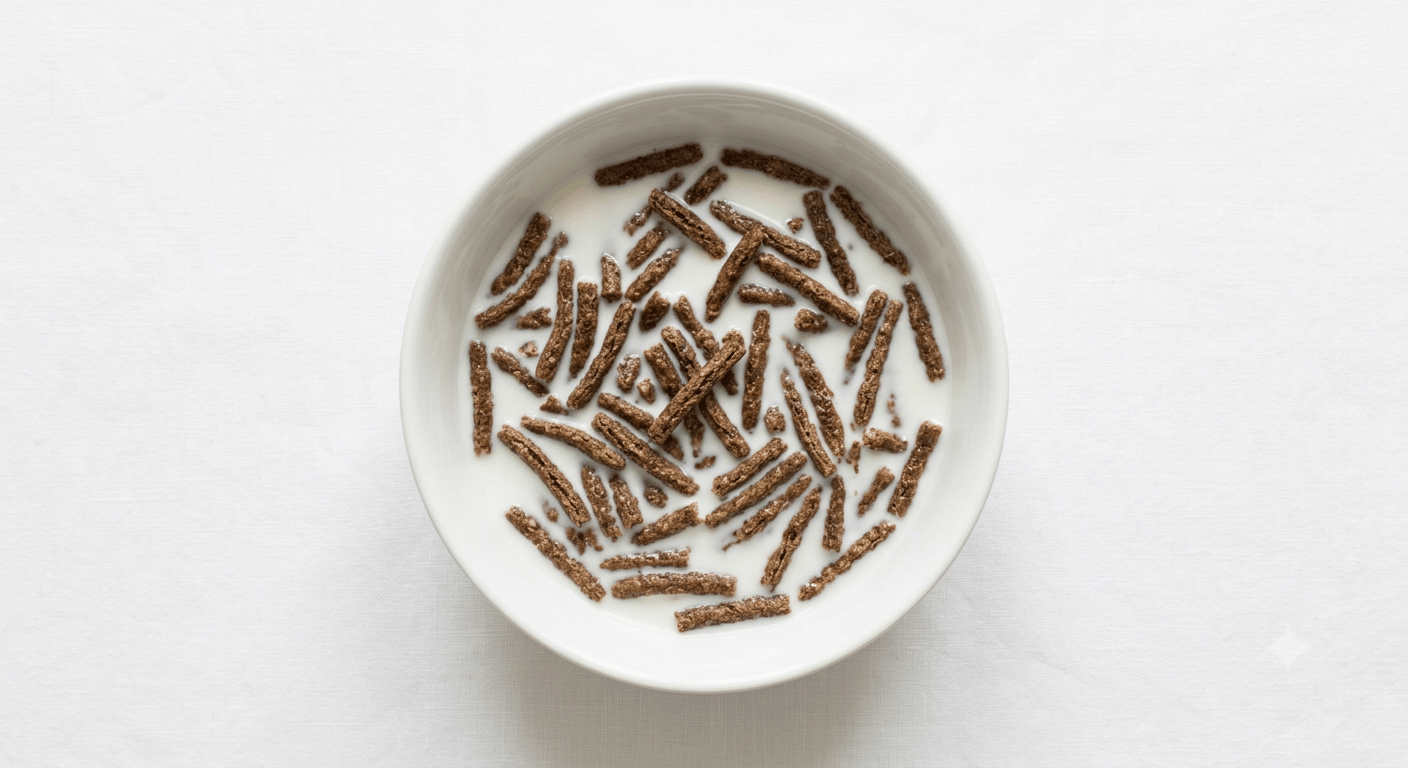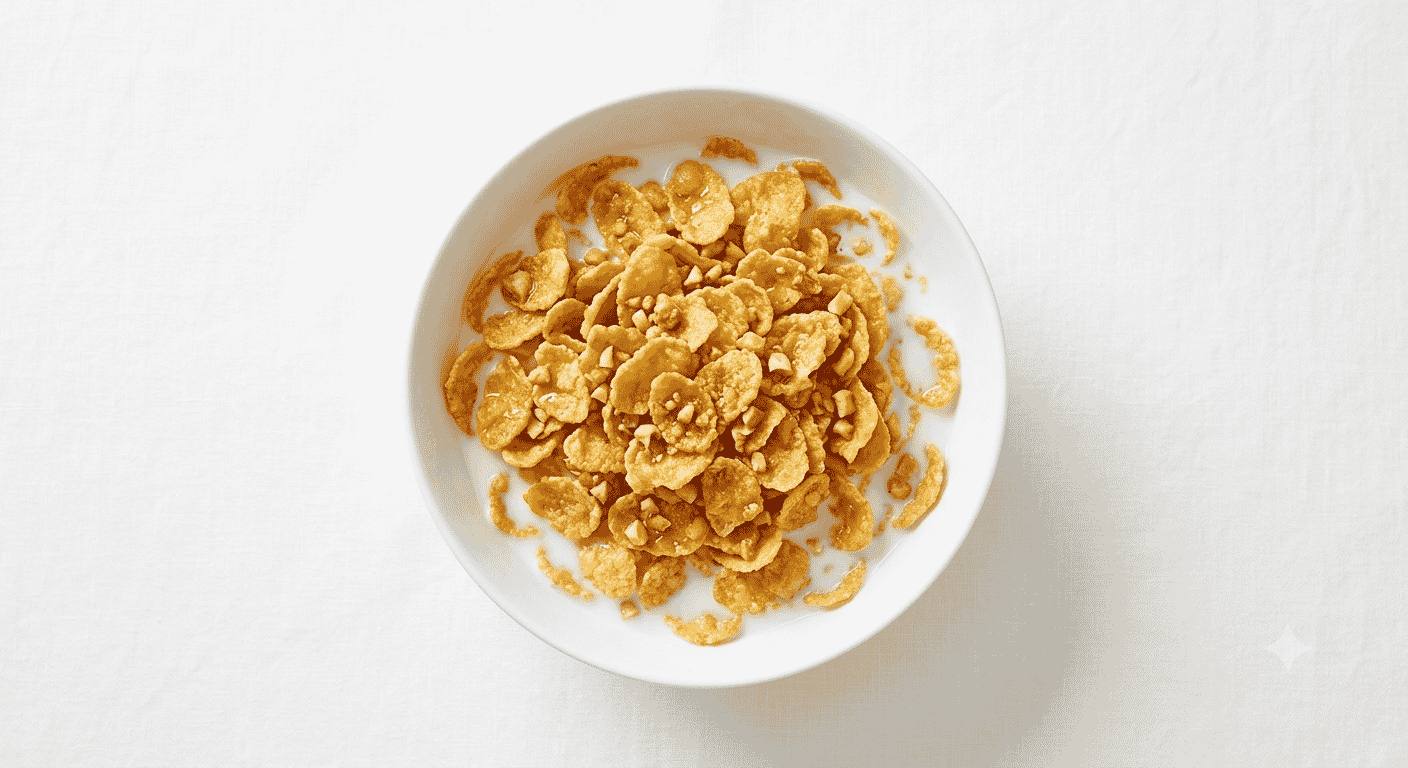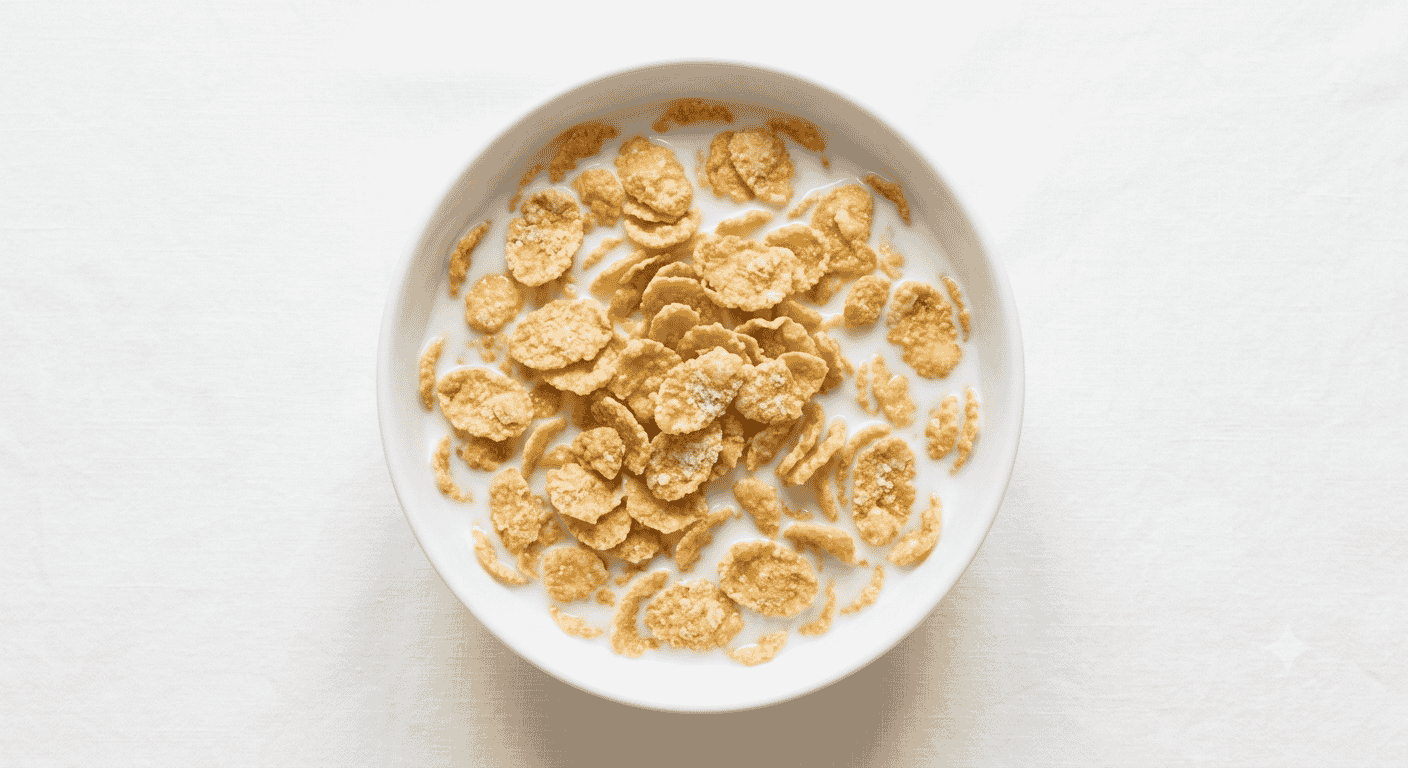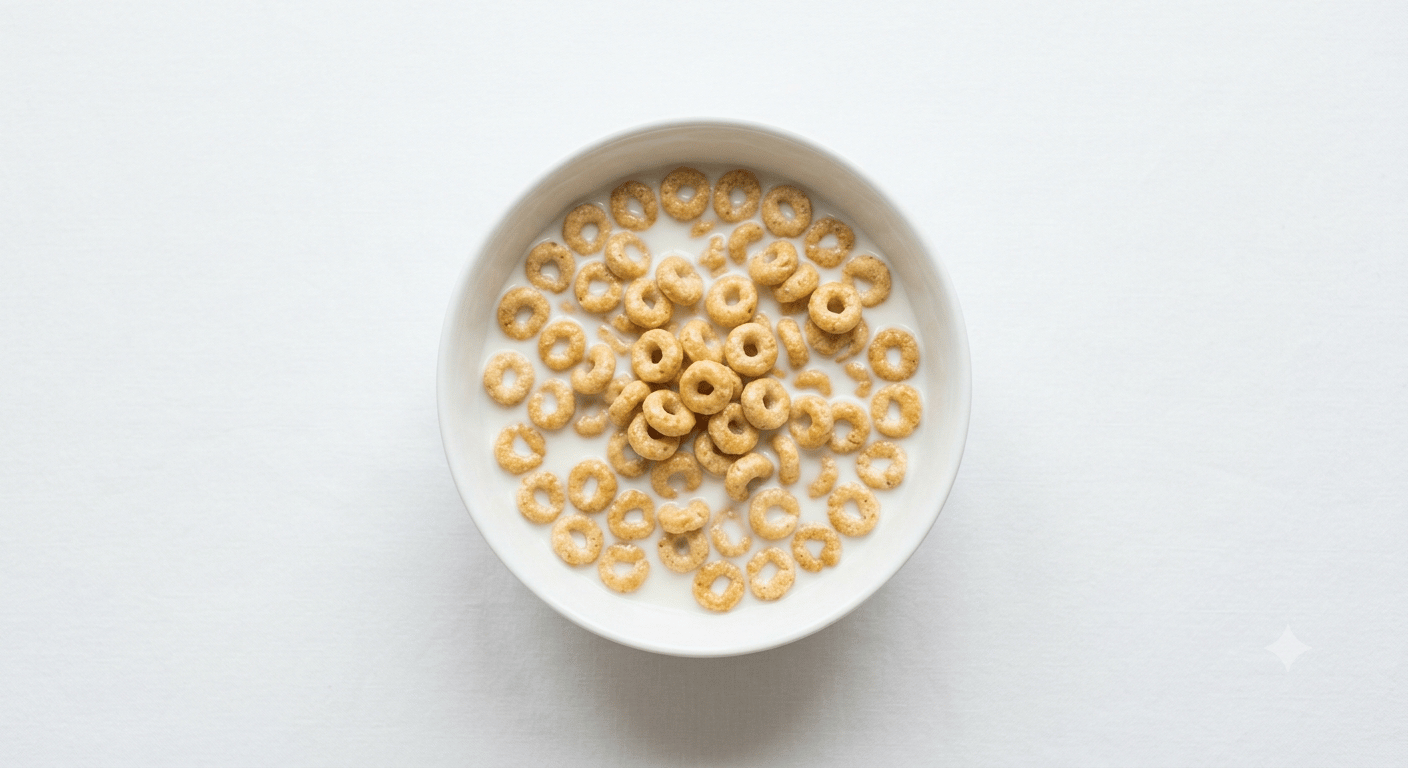

Every UK breakfast cereal broken down by bowl and milk type, with the guidance on free sugar versus total sugar, why a 30g portion is smaller than almost anyone pours, and what fortification adds.
Breakfast cereal is the category where the headline sugar figure is most likely to mislead, and it misleads in both directions.
A bowl of porridge made with milk can show a total sugar figure above 12g and a free sugar figure of almost nothing. A frosted cereal eaten dry can show a lower total and several times the free sugar. Reading the total sugar line tells you very little about which bowl is which, and the front of the pack rarely separates them.
Free sugar is sugar added during manufacture, plus the sugars in honey, syrups, fruit juice and dried fruit. The lactose in milk and the intrinsic sugars in whole grains are not free sugars and do not count toward the daily limit.
That distinction produces results most people find counterintuitive. A high-fruit muesli with no added sugar in the ingredient list can still carry a substantial free sugar figure, because drying fruit concentrates its sugars and breaks down the cell structure that would otherwise slow their absorption. Meanwhile a bowl of plain wheat biscuits with whole milk shows a high total sugar figure and a free sugar figure close to zero.
The NHS free sugar limits are 19g a day for children aged 4 to 6, 24g for ages 7 to 10, and 30g from 11 upwards. A single bowl of the sweeter cereals can account for a third of a young child's limit before anything else is eaten that day.
Nutrition figures on cereal packs are given per 30g. A 30g portion of flaked cereal is roughly four tablespoons, and it looks sparse in an adult bowl. Most people pour considerably more, and granola makes the gap worse because it is denser than flakes, so the same visible level in the bowl is a much larger weight.
This matters more than the difference between many of the cereals themselves. Pouring double a stated portion of a moderate cereal delivers more free sugar than a stated portion of a sweeter one.
Most UK breakfast cereals are fortified with iron and B vitamins, and many with vitamin D. For children this is a genuine and meaningful contribution to national micronutrient intake, and it is the strongest thing that can be said in cereal's favour.
It also cuts against an easy assumption. Premium mueslis and granolas that skip fortification are not automatically the better choice for a child, even where their sugar figures are lower. A fortified cereal with a moderate sugar figure may do more for a child than an unfortified one with less.
Plain wholegrain cereals sit at the low end for free sugar and the high end for fibre. Coated and frosted versions start from the same grain base and add a sugar coating, keeping the fortification and much of the fibre while carrying several times the free sugar. Sharing a brand name with a plain version does not make them nutritionally equivalent.
Granola and clustered cereals are baked with a syrup or oil-and-sugar binder, and that binder is what creates the clusters. It is added sugar in full.
Grain type changes the fibre profile. Oats contribute beta-glucan, a soluble fibre with established evidence behind its effect on cholesterol, which wheat does not provide in the same quantity. Bran-based cereals carry the most total fibre in the aisle; puffed and flaked refined grains carry the least.
Whole milk adds calories, fat, protein, calcium and iodine. Skimmed adds the same protein and calcium with less fat. Neither adds free sugar, whatever the total sugar figure on the finished bowl says.
Plant drinks are a different case and vary widely. Many are not fortified with calcium or iodine unless the label says so, and sweetened versions do add free sugar. For a child relying on cereal and milk as a regular breakfast, whether the drink is fortified is a more consequential question than which cereal is underneath it.
Each page includes a full nutrition breakdown per bowl, portion size and milk type comparisons, free sugar and fibre checked against daily reference intakes for your child's age, fortification detail, and a complete ingredient and allergen guide.