
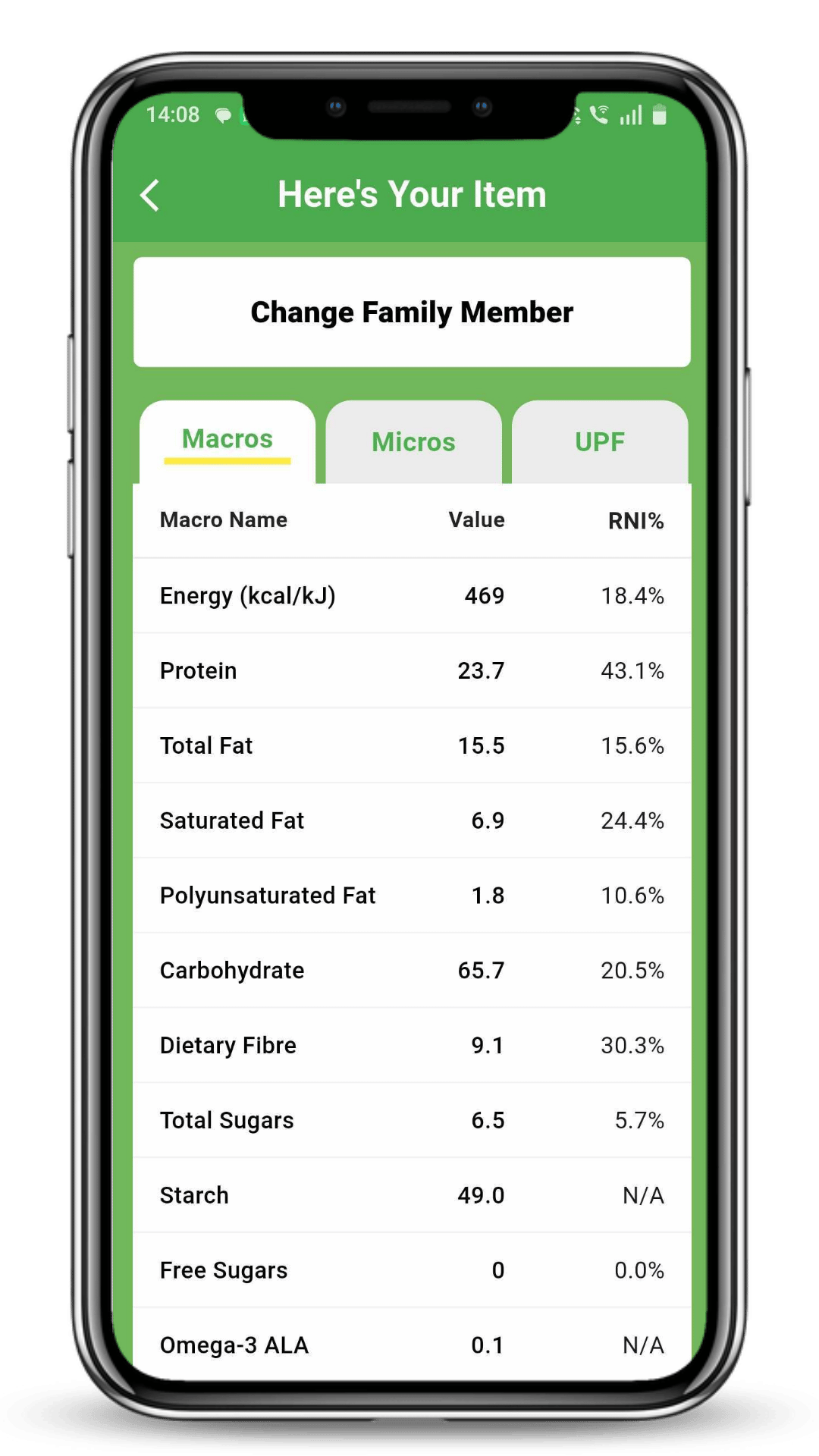
Snap your plate or upload a picture. Boone recognises the food, estimates the portion, and breaks it down into calories, macros, 29 micronutrients and how processed it is.


Free to start. No searching, no weighing.
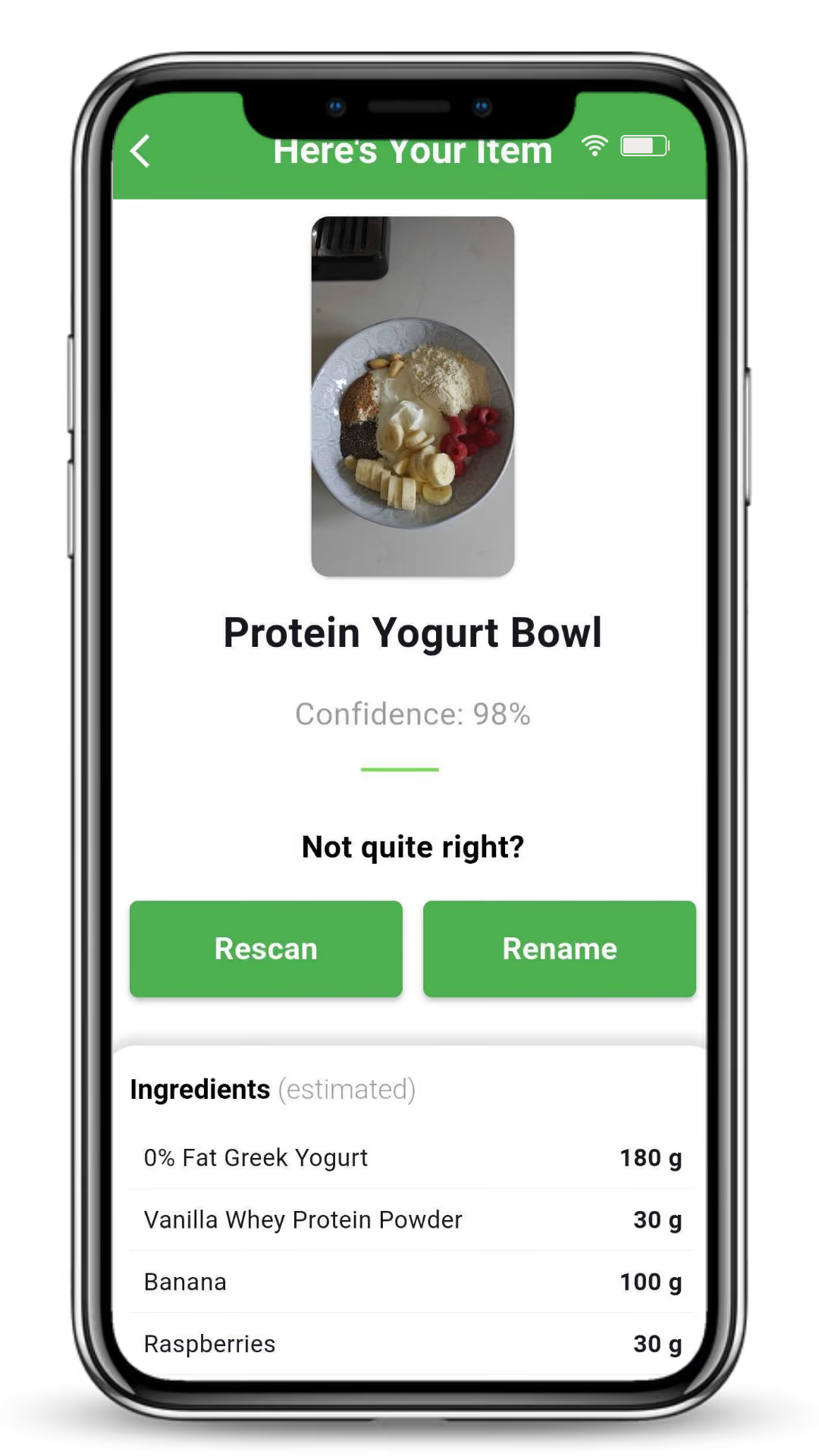
Searching a database, picking the right entry and guessing grams for every item gets old fast. A photo takes seconds, so you're far more likely to keep going long enough to learn something useful about your diet.
Point your camera at your plate, or pick a photo from your camera roll.
It identifies what's on the plate and estimates each portion from the image.
Add a detail if you want to, such as veggie rather than beef, then save it to your day.
Every meal you snap is broken down the same way as everything else in Boone, based on your age and sex.
For the whole meal and each item on the plate
Protein, carbohydrate and fat
29 Vitamins and minerals, added to your day
A NOVA rating for how processed the meal is likely to be
A heads-up on ingredients you've chosen to avoid
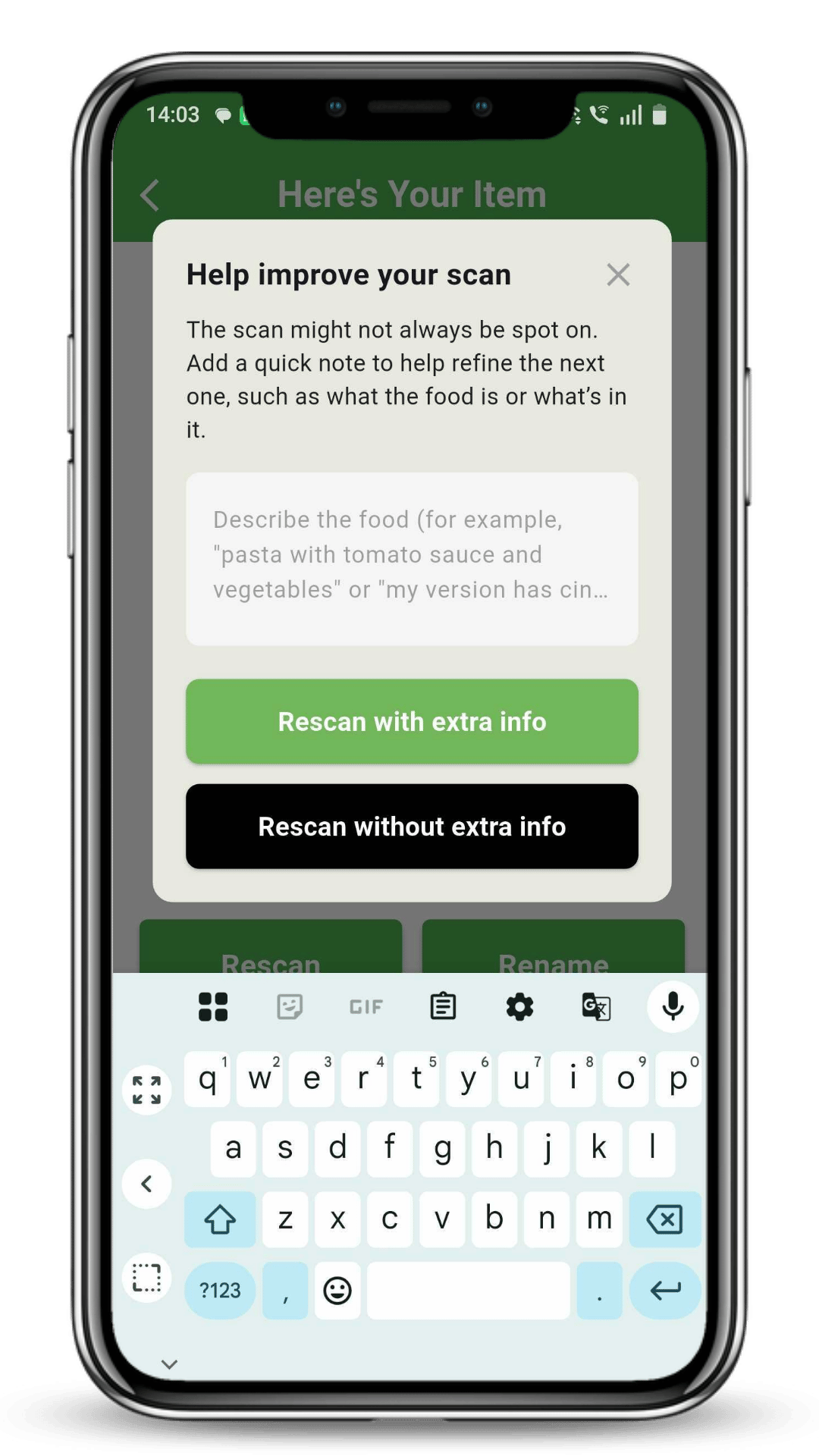
A photo can't always tell beef mince from soya, or whole milk from skimmed. When the difference matters, tell Boone in a tap and your numbers update. When it doesn't, just save and move on.
Photo logging estimates what's on your plate and how much of it there is. It's quick and close enough to show real patterns in your diet, which is what matters over weeks and months. Mixed dishes and food made to order are the hardest to judge, so that's where adding a detail helps most.
Write it the way you'd say it: "two slices of toast with butter and a flat white".
All the ways to logThe quickest option for packaged food, with the ingredient list to back it up.
Food barcode scanner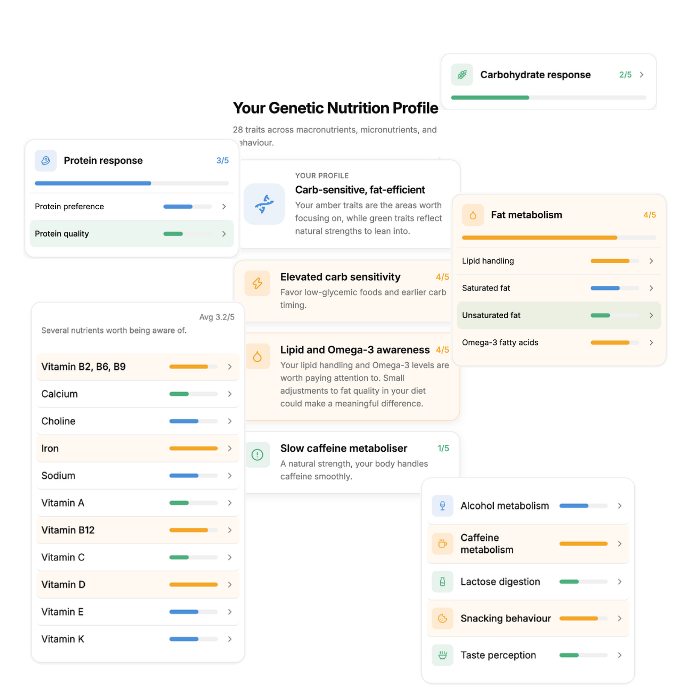
An optional home test adds your nutrigenetic profile, covering areas such as vitamin metabolism, iron and omega-3. It doesn't change your targets. It adds weight to the advice Boone already gives, where your genetics point the same way.