
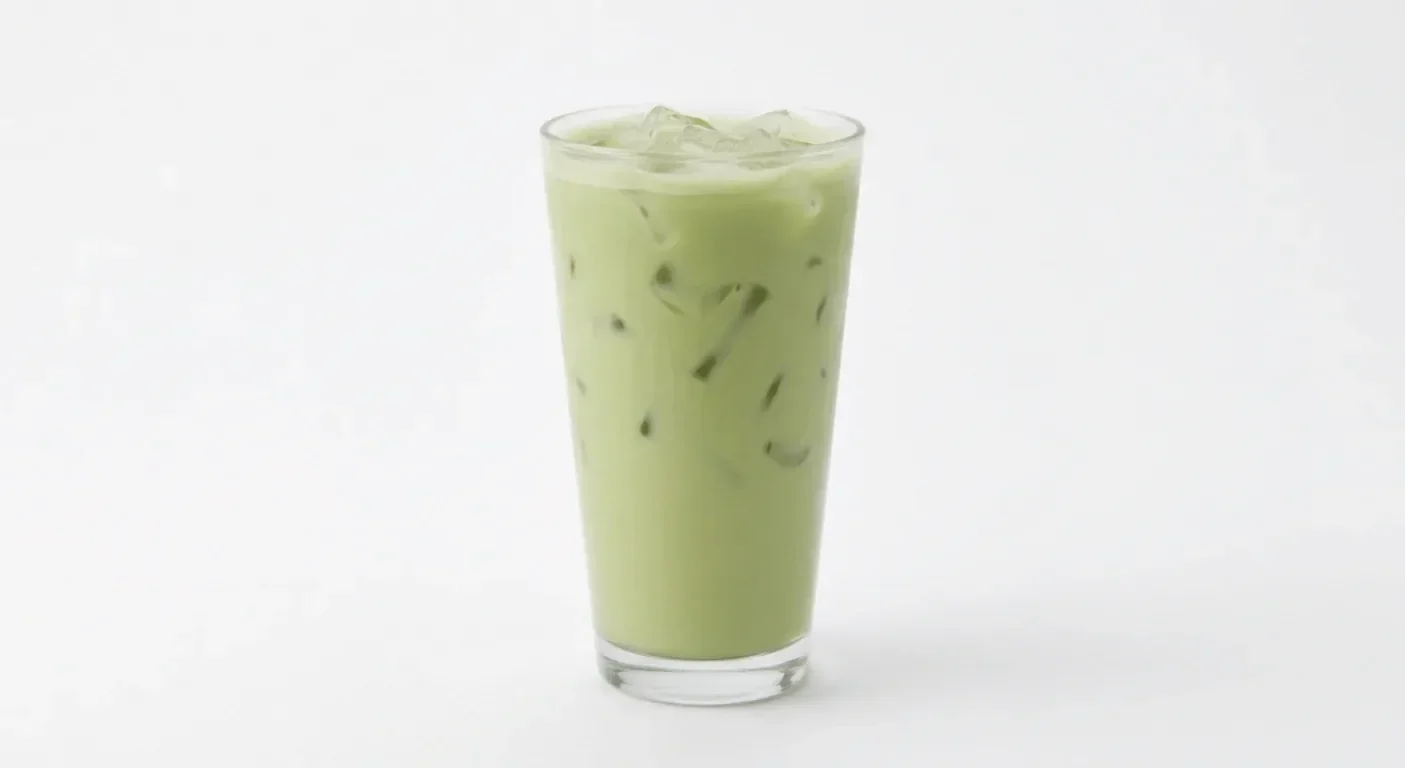
Figures from Greggs UK nutrition guide, September 2026 , collected by Boone
Vanilla Iced Matcha Latte, as published. Calorie split calculated by Boone. How
The Vanilla Iced Matcha Latte as published, seen four ways.
1 of 3 limits is over 30% in one drink, the UK front-of-pack mark for high.
Free sugar is the biggest issue: 11.3g is 38% of an adult’s daily 30g in one drink.
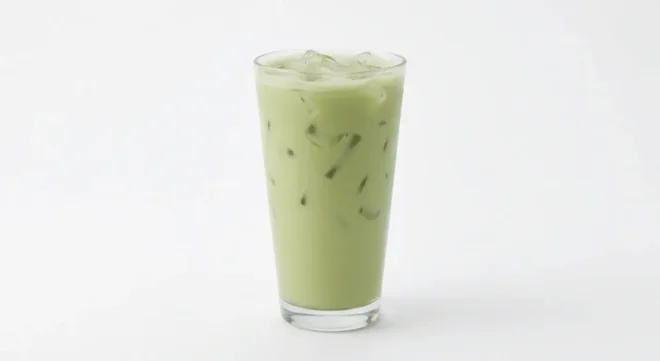 Lower free sugarIced Matcha Latte →0g free sugar (0%), 100 kcal
NHS limits by age: salt goes from 4% for an adult to 8% at age 4 to 6.
For age 4 to 6, free sugar is the bigger share: 11.3g is 59% of the day’s 19g limit.
 Lower-salt swapFairtrade Orange Juice 500ml →0g salt, 0% of the 3g limit
For age 7 to 10, free sugar is the bigger share: 11.3g is 47% of the day’s 24g limit.
Lower-salt swapFairtrade Orange Juice 500ml →0g salt, 0% of the 5g limitFor age 11 to 17, free sugar is the bigger share: 11.3g is 38% of the day’s 30g limit.
Lower-salt swapFairtrade Orange Juice 500ml →0g salt, 0% of the 6g limitProtein counts in your favour here, but the saturated fat is still 10% of the adult limit.
6.7g of protein, #132 on the menu. Per calorie the Iced Matcha Latte gives more: 7.6g per 100 kcal against 4.8g.
Most protein per calorieIced Matcha Latte →7.6g protein in 100 kcalHere the 96mg of sodium counts as useful after sweaty exercise.
21g of carbohydrate, with 22% of the energy from fat.
Natural sugars in milk, fruit and veg don’t count. NHS →
For smaller portions: the most nutrition per calorie, against all 213 Greggs items.
More protein per calorie than 67% of the 213 items on the menu.
More fibre per calorie than 0% of the 213 items on the menu.
Greggs does not publish vitamins or minerals for this item, so Boone does not estimate them.
The 2018 model indicates this drink is less healthy: it scores 2, above the line of 1.
Higher is less healthy; 1 or more would be classed as less healthy under this model. How the score works →
Joint #60 of 203 on the menu for this score (lower is better).
UK Nutrient Profiling Model 2018 →UK law does not require one for food made to order or sold loose, so Boone cannot count the ingredients or list the additives. Allergens are listed above, as published by Greggs. Recipes change, so check in the restaurant if you have an allergy.
Iced Matcha Latte 7.6g protein, 0.24g salt100 Fairtrade Orange Juice 250ml 0g protein, 0g salt112
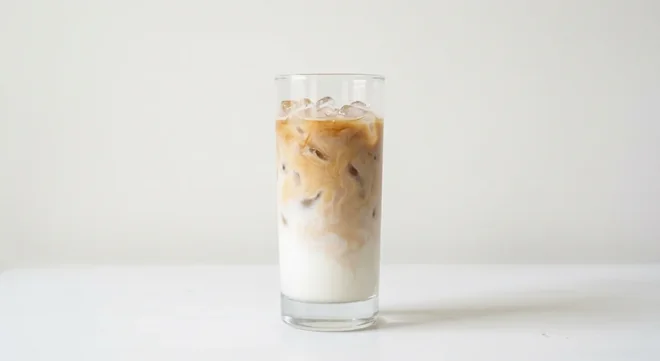 Iced Latte 8.8g protein, 0.23g salt124
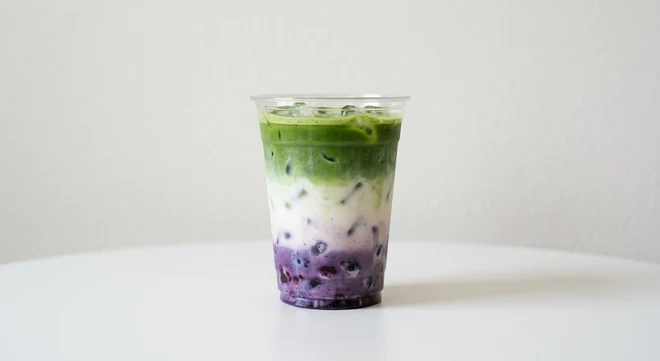 Blueberry Iced Matcha Latte 6.7g protein, 0.24g salt134
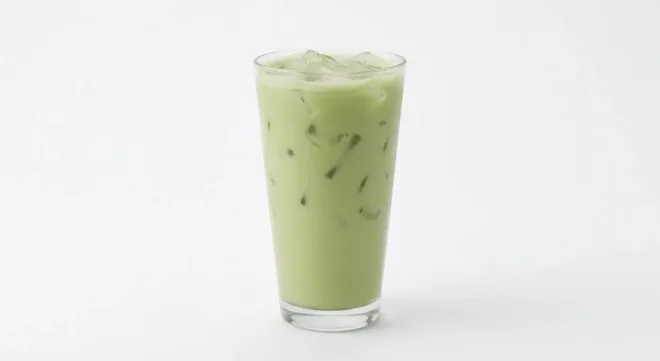 Vanilla Iced Matcha Latte 6.7g protein, 0.24g salt140
 Strawberry Iced Matcha Latte 6.7g protein, 0.24g salt149
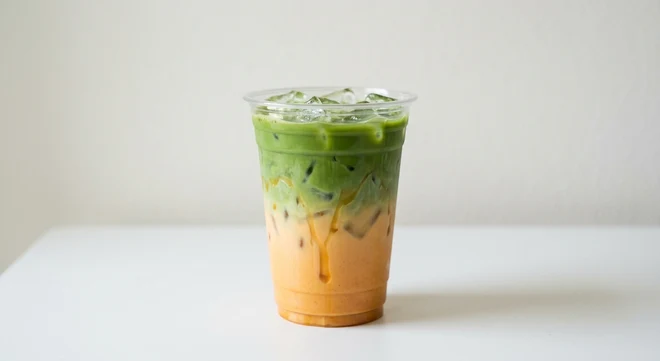 Pumpkin Spice Iced Matcha Latte with Salted Caramel Drizzle 6.8g protein, 0.39g salt156
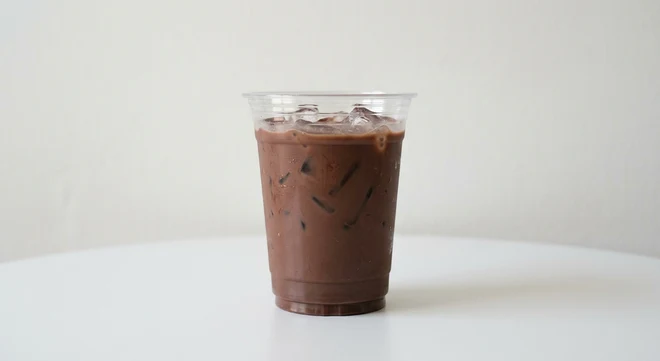 Iced Chocolate 4.7g protein, 0.39g salt161
140 kcal as published. 140 kcal is 7% of a 2,000 kcal adult reference intake.
For a child aged 4 to 6 it is 8% of the day’s 3g salt limit and 59% of the 19g free sugar limit in one item. A Fairtrade Orange Juice 500ml has 0g of salt, 0% of that salt limit.
20g of total sugar as published. Boone estimates 11.3g of it is free sugar: 2.8 teaspoons and 38% of an adult’s 30g daily maximum. The other 8.7g is naturally occurring and does not count.
6.7g, 4.8g per 100 kcal. It ranks #132 of 212 items on the menu for protein. The Iced Matcha Latte gives the most protein for the calories, 7.6g per 100 kcal.
2 on the UK Nutrient Profiling Model 2018, calculated by Boone per 100g. Scores run from -20 to 40, and the higher the score, the less healthy the model rates the food. Foods scoring 1 or more would be classed as less healthy under this model.
As published, milk.
Source. Greggs UK nutrition guide, September 2026 , per item as sold.
Collected. Copied by Boone from Greggs’s published figures. Data checks are led by Murray Dare.
Calculated by Boone. Labelled where it appears.
Limits. NHS free sugar and salt limits by age; UK reference intakes for adults.
