
Waitrose own-brand cereals, the least healthy first
All 40 Waitrose own-brand cereals, scored per 100g with the UK Nutrient Profiling Model 2018. Lower is healthier, and cereals scoring 4 or more count as less healthy.
NPM 2018 score
40 cereals, least healthy first. Scores are per 100g.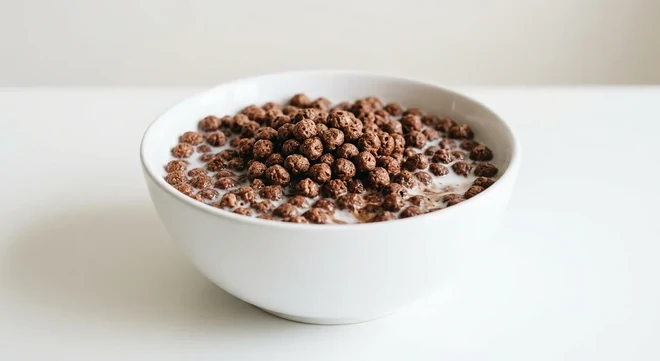 Choco PopsPuffs, hoops and popsLess healthyPenalty points 17, credits 4. 118 kcal and 6.7g free sugar a bowl132
 High Protein Nuts & Seeds GranolaGranolaLess healthyPenalty points 20, credits 8. 135 kcal and 2.9g free sugar a bowl123
 Triple Chocolate CrispClusters and crunchLess healthyJointPenalty points 20, credits 10. 133 kcal and 6.5g free sugar a bowl104
 Banana & Papaya GranolaGranolaLess healthyJointPenalty points 19, credits 9. 128 kcal and 5.4g free sugar a bowl105
 Essential Rice PopsPuffs, hoops and popsLess healthyJointPenalty points 12, credits 2. 116 kcal and 1.5g free sugar a bowl10
 Free From Chocolate & Hazelnut GranolaGranolaLess healthyJointPenalty points 19, credits 10. 132 kcal and 9.5g free sugar a bowl97
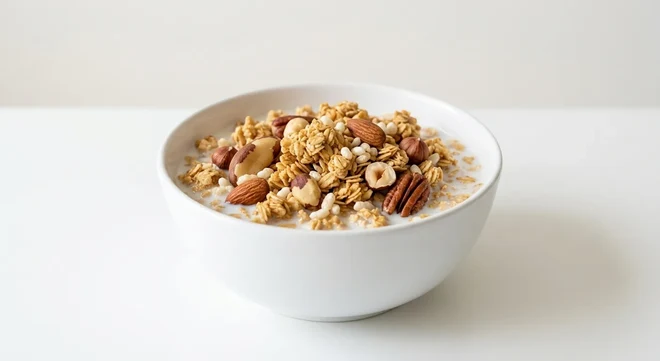 Nut CrispClusters and crunchLess healthyJointPenalty points 19, credits 10. 138 kcal and 5.6g free sugar a bowl98
 Special FlakesFlakesLess healthyJointPenalty points 16, credits 7. 113 kcal and 3.7g free sugar a bowl99
 Mixed Berry CrispClusters and crunchLess healthyJointPenalty points 17, credits 9. 131 kcal and 5.9g free sugar a bowl810
 Special Flakes & Red FruitsFlakesLess healthyJointPenalty points 16, credits 8. 112 kcal and 3.4g free sugar a bowl8
Cereal images are illustrations created by Boone, not photographs.
The whole Waitrose Own-Brand cereal range at a glance
Each dot is one cereal, coloured by type. Left of the line is healthier. Porridge oats, sachets and pots score best on average; Puffs, hoops and pops score worst.
22 of these 40 cereals count as less healthy
Since October 2022, larger shops in England have not been allowed to place less healthy breakfast cereals, those scoring 4 or more, at checkouts, store entrances or aisle ends. The same score is used here, so a cereal marked less healthy is one Waitrose cannot put in those spots.
How the score works →Healthiest of each Waitrose Own-Brand cereal type
The same kind of cereal, compared.
 FlakesEssential Corn FlakesScore 7, against Special Flakes at 9Still less healthy
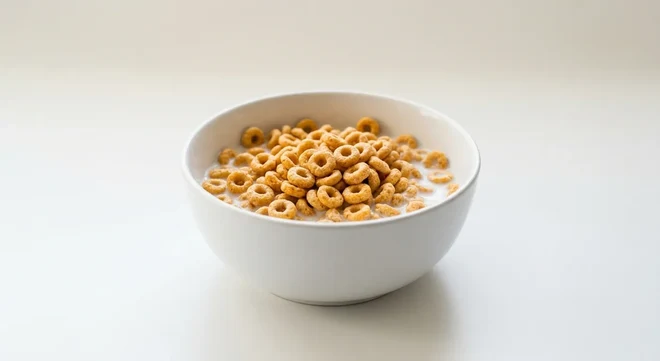 Puffs, hoops and popsEssential Multigrain HoopsScore 6, against Choco Pops at 13Still less healthy
 Wheat biscuits and branEssential Wholewheat BiscuitsScore −6, against Essential Bran Flakes at 7Healthier
 GranolaLow Sugar Berry GranolaScore −8, against High Protein Nuts & Seeds Granola at 12Healthier
 MuesliDuchy Organic Muesli with Raisins & AlmondsScore −10, against Essential Fruit Muesli at 4HealthierClusters and crunchMixed Berry CrispScore 8, against Triple Chocolate Crisp at 10Still less healthy
 Porridge oats, sachets and potsDuchy Organic Jumbo Rolled OatsScore −10, against Golden Syrup Porridge Pot at 8Healthier
Quick answers
Which Waitrose own-brand cereal is the healthiest?+
7 share the best nutrient profiling score, -10: Waitrose Duchy Organic Jumbo Rolled Oats, Waitrose Duchy Organic Muesli with Raisins & Almonds, Waitrose Essential Porridge Oats, Waitrose Free From Gluten Free Porridge Oats, Waitrose Original Instant Porridge Oats, Waitrose Porridge Oats with Wheatbran and Waitrose Scottish Porridge Oats. Lower scores are healthier.
Which Waitrose own-brand cereal is the least healthy?+
Waitrose Choco Pops has the worst score, 13.
How many Waitrose own-brand cereals count as less healthy?+
22 of the 40. A food scoring 4 or more is classed as less healthy under the 2018 model.
Why is the score the same for a small and a large bowl?+
The model scores food per 100g, so it measures what a cereal is made of, not how much you pour. Use the product pages to see a portion against your daily limits.
Where does this data come from?+
The nutrition panels and ingredients lists on Waitrose own-brand cereal listings at waitrose.com, collected in October 2026. Branded cereals sold at Waitrose, such as Kellogg’s or Weetabix, are not included. Boone works out free sugar, manufactured ingredients and nutrient profiling scores from them.
Scores use the government’s 2018 nutrient profiling model, calculated per 100g from the nutrition panels and ingredients on Waitrose own-brand listings. Points are added for energy, saturated fat, free sugars and salt, and taken away for fibre, protein, and fruit, vegetable, nut and seed content. Foods scoring 4 or more are classed as less healthy.
Fruit, nut and seed content is taken from the percentages declared in each ingredients list, so cereals that do not declare them score zero for it. The model scores what a cereal is made of rather than how much you eat.
How the NPM score works →