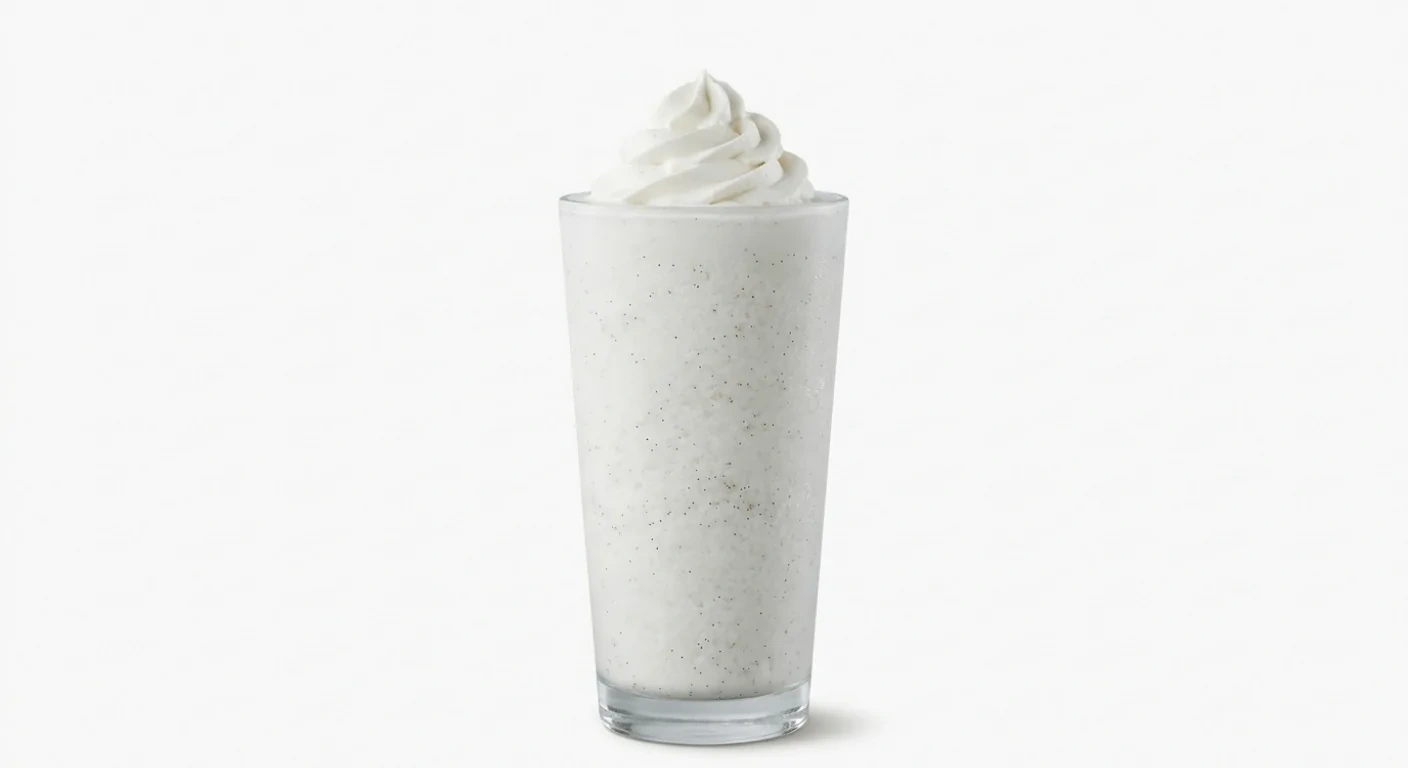
Figures from Starbucks US nutrition information, collected by Boone, checked 8 October 2026
Horchata Crème Frappuccino (Grande), as published. Starbucks US does not publish added sugars, so Boone estimates them from the ingredient list. High and Low follow FDA’s 20% and 5% Daily Value marks. Calorie split calculated by Boone. How
The Horchata Crème Frappuccino (Grande) as published, seen four ways.
2 of 3 are 20% of the Daily Value or more in one drink, FDA’s mark for high.
Added sugar is the biggest issue: 46g is 92% of the Daily Value in one drink.
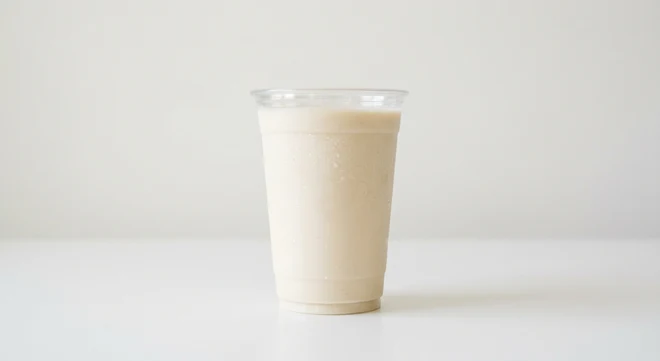 Lower added sugarKoia Vanilla Bean Nutrition Shake →0g added sugar (0% DV), 180 calories
Sodium limits by age: 11% for an adult, 17% at age 4 to 8.
For age 4 to 8, 250mg of sodium is 17% of the day’s 1,500mg limit in one drink. The Dietary Guidelines advise no added sugar at this age; this has 46g.
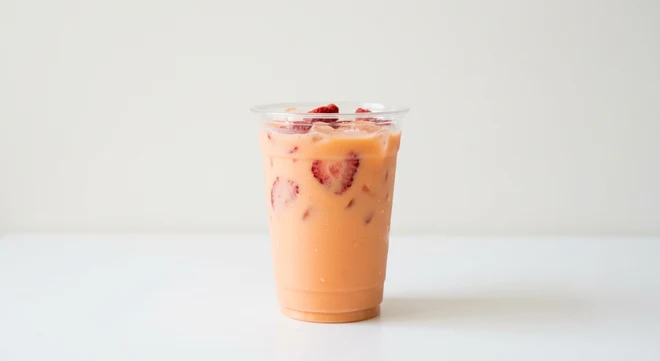 Lower-sodium swapMango Dream (Tall) →60mg sodium, 4% of the 1,500mg limit
For age 9 to 13, 250mg of sodium is 14% of the day’s 1,800mg limit in one drink.
Lower-sodium swapMango Dream (Tall) →60mg sodium, 3% of the 1,800mg limitFor age 14 to 18, 250mg of sodium is 11% of the day’s 2,300mg limit in one drink.
Lower-sodium swapMango Dream (Tall) →60mg sodium, 3% of the 2,300mg limitProtein counts in your favour here, but the saturated fat is still 50% of the Daily Value.
5g of protein, #86 on the menu. Per calorie the Iced Sugar-Free Caramel Protein Matcha (Grande) gives more: 14.8g per 100 calories against 1.3g.
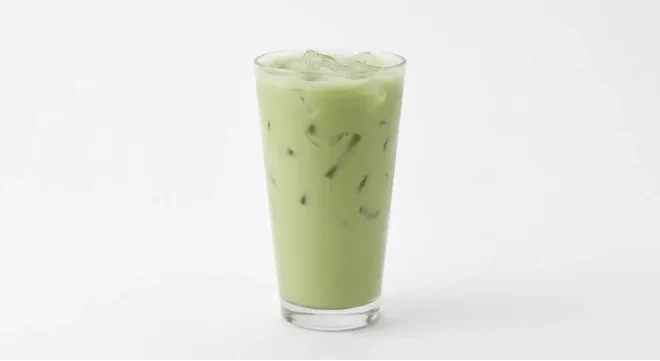 Most protein per calorieIced Sugar-Free Caramel Protein Matcha (Grande) →31g protein in 210 calories
Here the 250mg of sodium counts as useful after sweaty exercise.
53g of carbohydrate, with 38% of the energy from fat.
Sugar naturally in milk, fruit and vegetables is not added sugar. Dietary Guidelines →
For smaller portions: the most nutrition per calorie, against all 662 Starbucks US items.
More protein per calorie than 38% of the 662 items on the menu.
More fibre per calorie than 0% of the 662 items on the menu.
Starbucks US does not publish vitamins or minerals for this item, so Boone does not estimate them.
Would not meet FDA’s ‘healthy’ criteria for a dairy drink: over the sodium, saturated fat and added sugars limits.
110 of 662 Starbucks US items are within the limits for their category.
FDA final rule, December 2024. Food makers must comply by 25 February 2028.
23 ingredients across 6 parts; 8 are additives or processed (orange).
Group 4 because of the additives or industrial ingredients listed above. How NOVA works →
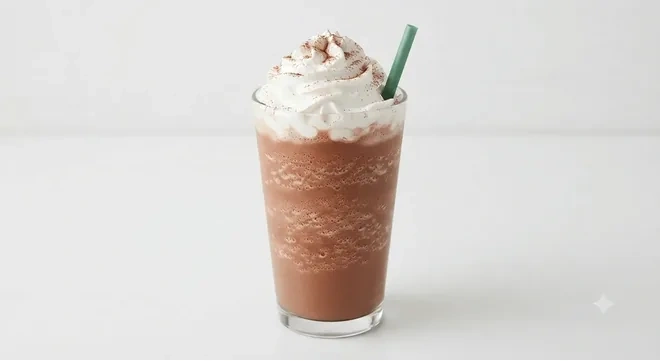 Mocha Frappuccino (Grande) 5g protein, 220mg sodium370
 Vanilla Bean Crème Frappuccino (Grande) 5g protein, 250mg sodium380
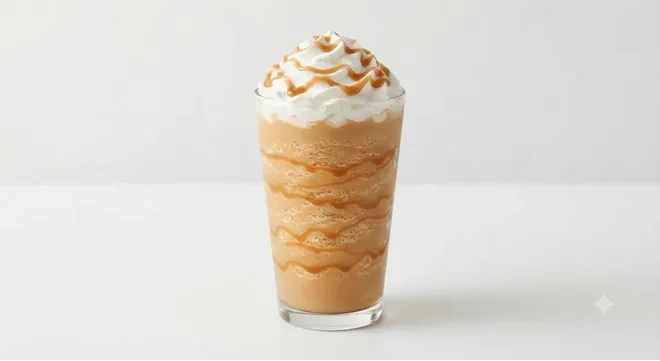 Caramel Frappuccino (Grande) 4g protein, 230mg sodium380
 Pistachio Frappuccino (Grande) 4g protein, 280mg sodium380
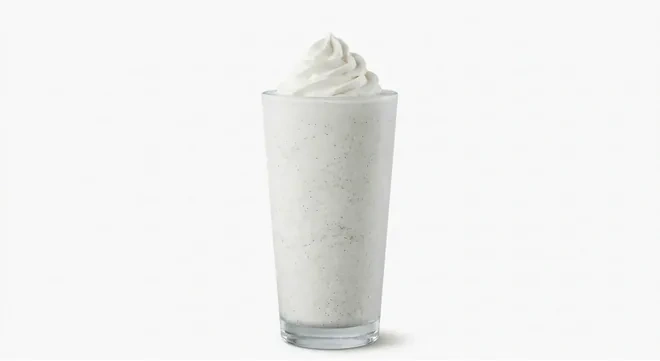 Horchata Crème Frappuccino (Grande) 5g protein, 250mg sodium380
 Horchata Frappuccino (Grande) 4g protein, 220mg sodium400
 Pistachio Crème Frappuccino (Venti) 7g protein, 370mg sodium410Pistachio Frappuccino (Venti) 6g protein, 320mg sodium420
380 calories as published. That is 19% of the 2,000-calorie Daily Value used on US food labels.
For a child aged 4 to 8 it is 17% of the day’s 1,500mg sodium limit in one item. It has 46g of added sugar, and the Dietary Guidelines advise none for children aged 10 and under. A Mango Dream (Tall) has 60mg of sodium, 4% of that limit.
53g of total sugars, of which 46g is added sugar, as estimated by Boone. That is 11.5 teaspoons and 92% of the 50g Daily Value. The Dietary Guidelines advise no more than 10g of added sugar a meal from age 11.
5g, 1.3g per 100 calories. It ranks #86 of 161 items on the menu for protein. The Iced Sugar-Free Caramel Protein Matcha (Grande) gives the most protein for the calories, 14.8g per 100 calories.
No. Judged as a dairy drink, it is over FDA’s limit for sodium, saturated fat and added sugars. This is Boone’s reading of the FDA criteria; Starbucks US makes no ‘healthy’ claim.
Yes, NOVA group 4. The ingredient list includes emulsifiers, acidity regulators, preservatives and flavourings.
Of the 9 major US allergens, it contains milk.
Source. Starbucks US nutrition information, per item as sold.
Collected. Copied by Boone from Starbucks US’s published figures. Data checks are led by Murray Dare.
Calculated by Boone. Labelled where it appears.
References. FDA Daily Values; USDA estimated calorie needs; Dietary Guidelines for Americans, 2025 to 2030; sodium limits by age from the National Academies; FDA ‘healthy’ claim criteria.
Cookies on Boone
We use analytics cookies to see how people use the site so we can improve it. They are only set if you accept. Cookie policy